
Last updated November 2, 2026
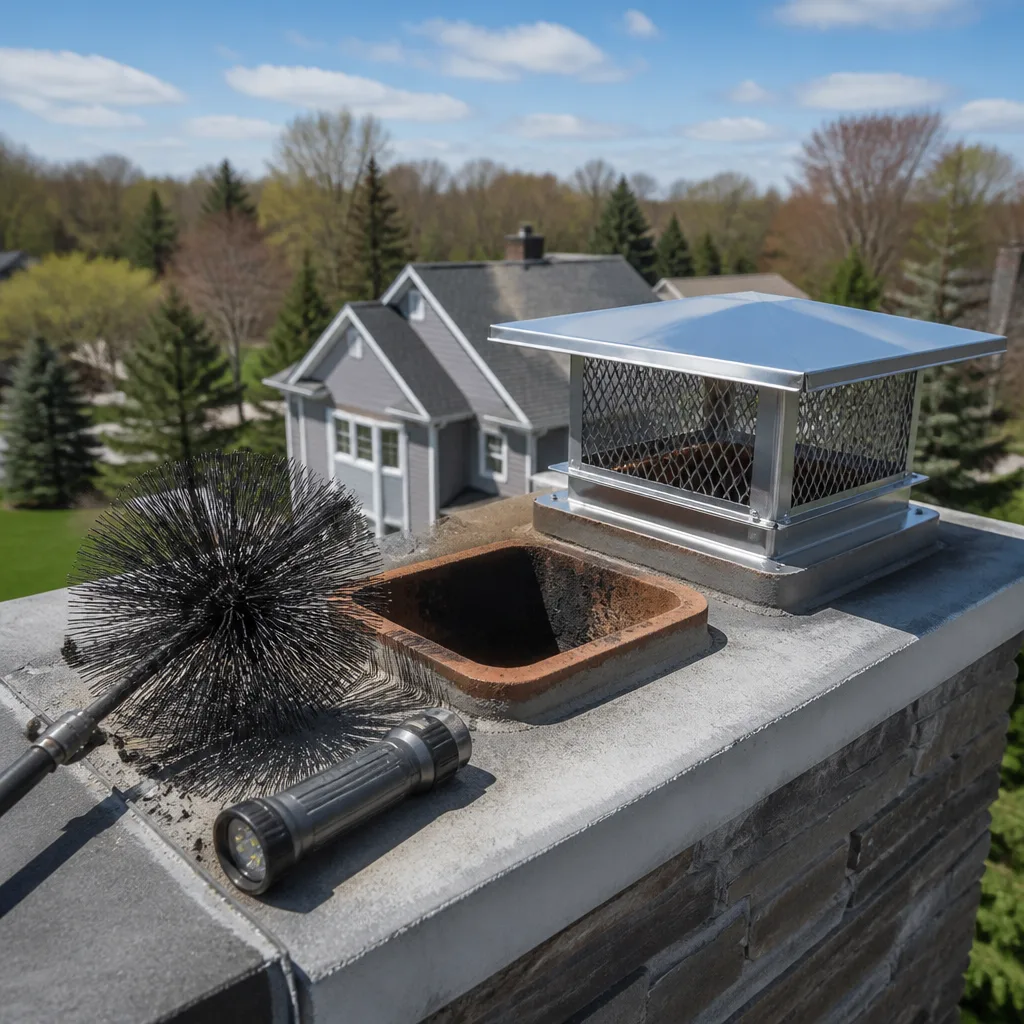 Sweep & inspection
 Caps & crowns
 Flue relining
 Masonry repair
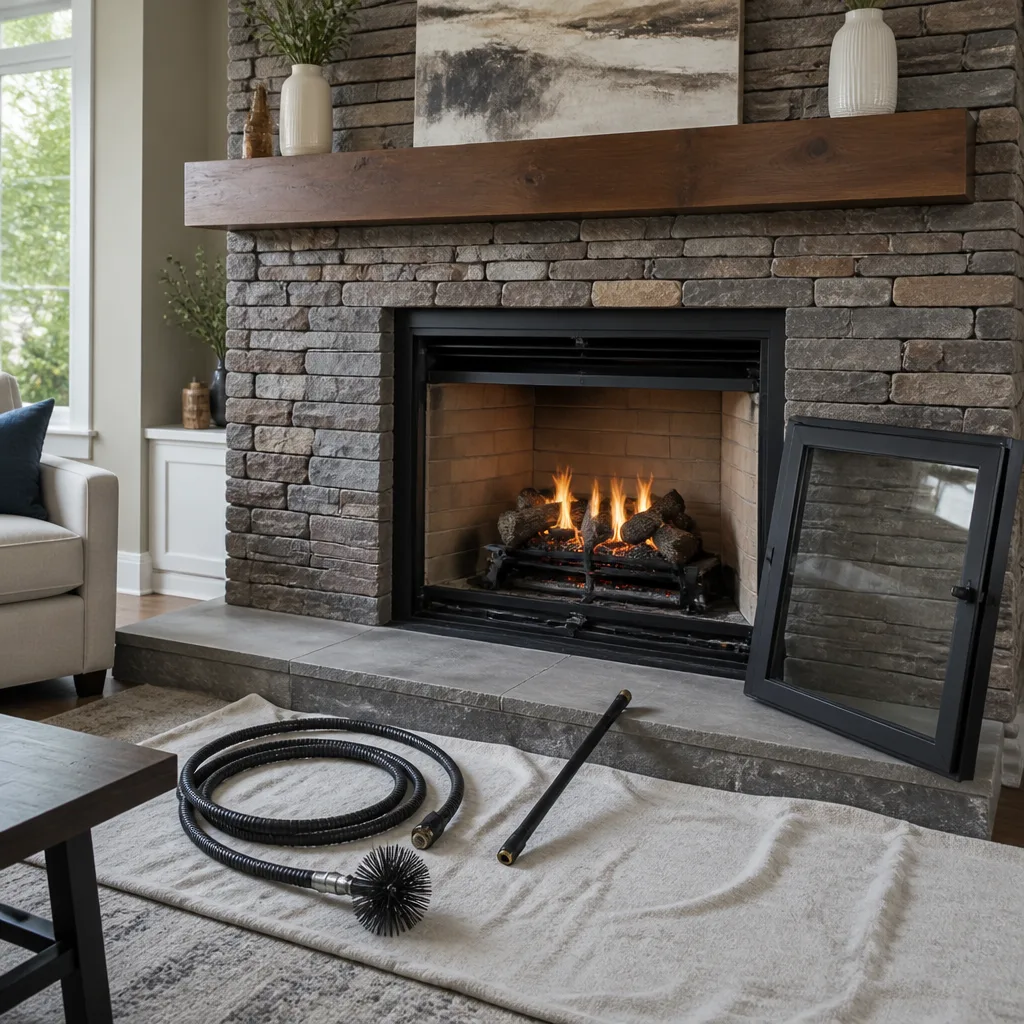 Gas fireplace service
Level 1 sweep and inspection to the NFPA 211 annual standard - flue, crown, cap, and flashing checked and photographed
Chimney sweep logs do not sweep chimneys. They loosen some creosote - which then falls where a brush and vacuum still have to collect it.
DIY vs Professional Chimney Cleaning: The Berryessa Homeowner’s Decision Guide
A chimney brush and a Shop-Vac will remove loose creosote. They won’t tell you that the flue tile below the smoke shelf has a hairline fracture that’s been venting carbon monoxide into your wall cavity for two seasons. That’s the real divide in Berryessa between do-it-yourself chimney maintenance and professional service, and it has very little to do with elbow grease. This guide maps exactly what a prepared homeowner can accomplish with consumer equipment, where that effort stops being useful, and how to know which path your fireplace actually needs. For more guides & resources, see our full library.
Styles & brands we work with
- Sweep & inspection
- Caps & crowns
- Flue relining
- Masonry repair
- Gas fireplace service
Quick Answer
DIY chimney cleaning in Berryessa is realistic for removing light, powdery Stage 1 creosote from accessible flue sections using a rotary brush kit, but it cannot assess liner integrity, smoke chamber condition, crown deterioration, or glazed Stage 2/3 creosote buildup. If your fireplace sees more than 10 fires per season or hasn’t had a camera inspection in three years or more, professional cleaning with visual documentation is the safer starting point. See our guide on How to Hire a Chimney Cleaning Contractor in Berryessa: A Step-by-Step Guide for what to ask before booking.
Table of Contents
- What DIY Chimney Cleaning Can Actually Accomplish
- What DIY Cleaning Cannot Do, No Matter How Thorough You Are
- The Equipment Gap: Consumer Kits vs. Professional Rotary Systems
- Creosote Stages Explained: Why the Type of Buildup Changes Everything
- The Insurance Dimension: What Happens When a DIY-Cleaned Chimney Fires
- A Decision Framework for Berryessa Fireplace Owners
- Common Mistakes to Avoid
- When to Call a Professional
- Frequently Asked Questions
- The Bottom Line
What DIY Chimney Cleaning Can Actually Accomplish
Let’s be precise about this, because most online advice swings between “never touch your chimney” and “anyone can sweep a flue.” The truth sits in the middle, and it depends entirely on what’s inside your chimney right now.
A homeowner with a proper rotary chimney brush kit, fiberglass rods, and a decent Shop-Vac can remove loose, powdery creosote from the accessible length of a flue. That’s Stage 1 creosote: a light gray or brown dust that brushes off with moderate effort. In a Berryessa home where the fireplace burns seasoned hardwood and gets used maybe four or five times per year, this is often the only type of buildup present.
What DIY work can realistically achieve looks like this:
- Removing light soot and Stage 1 creosote from the flue walls in a straight-run masonry chimney
- Clearing loose debris like small twigs, leaves, or a bird’s nest at the top of the flue, provided you have safe roof access
- Cleaning the firebox floor and removing ash buildup that reduces draft
- Visually confirming that the damper opens and closes without obstruction
- Documenting what you can see from the top and bottom openings with a flashlight
None of this is trivial. It takes time, it’s physically awkward, and it requires a roof or a ladder setup that most Berryessa homeowners understandably find unappealing. But it is within reach for someone who’s reasonably handy and willing to follow safety precautions.
The key word is “accessible.” DIY cleaning works on what you can reach and see: the flue walls you can brush, the firebox you can vacuum. Everything beyond that line is where the useful part of DIY ends.
What DIY Cleaning Cannot Do, No Matter How Thorough You Are
Here’s where the guide gets honest. A brush removes what a brush touches. It does not inspect what it touches afterward. It does not reach the smoke shelf in most masonry chimneys, where creosote accumulates in a dense pile behind the damper. It does not tell you anything about the flue liner itself.
Professional chimney sweeping in Berryessa produces a different outcome because the technician is doing two jobs at once: cleaning and assessing. A camera inspection, which most Berryessa chimney companies include or offer as a standard add-on, shows the inside of the flue liner in a way no brush and flashlight ever will.
Here is what DIY cleaning cannot do:
- Assess flue liner condition. Hairline cracks, spalling clay tiles, or deteriorated mortar joints are invisible from the top and bottom openings. They need a camera.
- Inspect the smoke chamber. This area above the damper is a creosote trap in masonry chimneys, and it’s structurally inaccessible from a rooftop brush run.
- Perform a video scan. A $60 borescope from a hardware store is not a chimney camera. It lacks the lighting rig, articulation, and recording quality needed to document a flue.
- Evaluate the crown. Crown cracks and spalling are visible from the roof, but interpreting them requires knowing how water intrusion travels through a chimney system. Brushing a flue doesn’t teach that.
- Remove Stage 2 or Stage 3 creosote. Glazed, tarry, or hardened creosote will not come off with a homeowner-grade brush. It requires rotary chains, chemical treatment, or both.
- Document the cleaning for insurance purposes. If a chimney fire happens, your insurer will ask for proof of maintenance. A professional report with photos is a document. A receipt from Amazon for a brush is not.
In our experience, homeowners who DIY their chimney cleaning are usually surprised by how much they cannot see. That’s not a failure of effort. It’s a function of equipment and access.
The Equipment Gap: Consumer Kits vs. Professional Rotary Systems
The brush you buy at a hardware store looks roughly like the one we use. Roughly. The difference matters more than most people expect.
A consumer rotary brush kit typically includes a plastic or wire brush head sized for a general flue diameter, flexible rods that connect with a basic twist-lock mechanism, and minimal guidance about rod support from the top down. These kits work acceptably on light soot in a clean flue. They fail quickly when the liner has uneven surfaces, offset flue sections, or heavier buildup.
Professional rotary systems are built differently. The rod systems are stiffer and better supported from both ends. The brush heads are matched to the exact flue diameter and composition: stainless steel for clay tile liners, poly for stainless liners. The motorized driver spins the brush at a controlled speed, which matters because chopping at a glazed creosote surface with a hand-turned brush does nothing but polish it.
What we see in Berryessa chimneys that were previously DIY-cleaned:
- Creosote ridges left in the mortared joints between flue tiles, where a consumer brush skipped right over the recessed surface
- Compact creosote in the corbelled area of the smoke chamber, untouched because no brush reached it
- Flue walls polished smooth by a wire brush run too aggressively, giving a false visual impression of cleanliness
- Rod marks or liner scoring from a stiff rod pressed against a clay tile at an angle
None of these are disasters. But they are exactly the kind of incomplete cleaning that masks a larger problem underneath. A flue that looks clean from the top can still have a quarter inch of hard creosote at the smoke shelf level, which is precisely where chimney fires start.
The honest framing: consumer kits clean visible surfaces. Professional systems clean the flue and the areas you can’t see well enough to judge. That’s a measurable difference, and it’s why Chimney Sweep Berryessa specifies professional-grade equipment for every job rather than the consumer-market brushes sold at big-box retailers.
Creosote Stages Explained: Why the Type of Buildup Changes Everything
Creosote is not one substance. It’s three distinct formations that require three different approaches. Understanding this is the single most useful thing a homeowner can learn about chimney maintenance.
Stage 1: Powdery soot and light creosote dust. Soft, brown or gray, brushes off with a standard wire or poly brush. This is what forms from hot, efficient fires with dry wood. DIY removal is realistic at this stage.
Stage 2: Flaky, crunchy, tar-like creosote. Dark brown or black, with a texture like corn flakes or hardened amber. It forms from cooler fires, partially seasoned wood, or restricted air supply. A hand brush struggles. A rotary system with the right head removes it, but it takes longer.
Stage 3: Glazed, shiny, hardened creosote. This is the dangerous one. It looks like black glass and behaves like a dense fuel layer. It forms in chimneys with chronic low-temperature fires, green wood, or compromised draft. Stage 3 creosote requires chemical treatment, rotary chains, or both. No consumer tool on the market removes it effectively.
Here is the Berryessa-specific angle: our damp winter mornings and shoulder-season fires create ideal conditions for creosote formation. For a complete maintenance calendar, read our Seasonal Chimney Cleaning Care for Berryessa: Year-Round Homeowner’s Guide. Homeowners who burn occasional fires from November through March, often with wood that’s been sitting uncovered through a rainy stretch, generate cooler fires and more rapid buildup than someone in a drier climate with a hot-burning stove.
The stage of creosote present is the deciding factor in the DIY question. If you can brush it off and see the liner surface cleanly underneath, you’re dealing with Stage 1. If you brush and the surface remains smooth, shiny, and unresponsive, you’re dealing with Stage 3, and no amount of additional brushing will help.
The Insurance Dimension: What Happens When a DIY-Cleaned Chimney Fires
Most Berryessa homeowners don’t think about their chimney until something goes wrong. Then the insurance process begins, and suddenly the difference between a documented professional cleaning and a Saturday afternoon with a brush kit matters a great deal.
Insurance policies for homes with fireplaces typically include a maintenance clause. The insured party is expected to maintain the chimney in a safe condition. If a chimney fire occurs, the adjuster will want to know: when was the last cleaning? Who performed it? Was there an inspection?
Here’s the scenario we hear about from homeowners after the fact:
- Homeowner cleans the chimney themselves with a hardware store brush kit.
- Six months later, a chimney fire starts in the smoke shelf area where the brush never reached.
- The insurance company investigates and finds no professional cleaning record.
- The adjuster determines that the homeowner’s self-performed maintenance was inadequate for the condition of the flue.
- The claim is disputed or partially denied because the homeowner cannot demonstrate that the chimney was properly maintained.
This is not to suggest every DIY cleaning leads to a denied claim. But the burden of proof shifts. A professional chimney sweep produces a dated report, often with photos from a camera inspection. That’s documentation. A brush kit purchase from a hardware store receipt is not.
The same logic applies the other direction. If you have a flue liner repaired with a professional system like durable products from HeatShield or DuraFlex, and that repair is documented, your pathway through a claim is clearer. The system is code-compliant, the installation is recorded, and the maintenance history is complete.
Insurance is not the reason to sweep your chimney. Fire safety is. But documentation matters, and DIY work generates none.
A Decision Framework for Berryessa Fireplace Owners
Here’s the part you can actually use. When should you DIY, and when should you call someone?
The 3-10-3 rule:
- Fewer than 3 fires per season and the last professional video inspection was within 12 months: DIY light cleaning is reasonable. Brush accessible flue surfaces, clean the firebox, and keep burning dry wood.
- More than 10 fires per season: Professional cleaning at least annually. The volume of creosote produced by regular burning exceeds what a consumer brush can reliably remove from the hidden areas of the chimney.
- No camera inspection in the last 3 years: DIY is the wrong starting point regardless of burn frequency. The first step is documentation. You need to know what the flue looks like before you decide what it needs.
Use this decision sequence:
- When was your last professional inspection? If more than 36 months ago, book a sweep with camera documentation first.
- How many fires do you burn? Under 3 per season, DIY is workable between professional visits. Over 10, professional cleaning is annual maintenance.
- What does the creosote look like? Powdery gray or brown: DIY brush work may be sufficient. Tarry, flaky, or glazed: stop and call. You need tools you don’t own.
- What kind of liner do you have? A stainless steel liner from a professional-grade system like DuraFlex is smooth and easier to clean, but it still needs camera inspection around the appliance connector joints. Clay tile liners crack and spall, and those failures are only visible on camera.
- What’s your roof situation? Steep pitch, clay tile roof, or limited ladder access in your Berryessa neighborhood: the risk-reward of DIY roof work shifts hard toward professional service.
The honest summary: DIY chimney cleaning is a maintenance task for a specific, narrow set of conditions. Most Berryessa homes with active fireplaces fall outside that set within two or three seasons of their last professional visit.
Common Mistakes to Avoid
- Assuming a clean firebox means a clean flue. The firebox is the easiest part of the chimney to clean, and it tells you almost nothing about the condition of the flue liner or smoke chamber. Creosote builds in the narrow passage above the damper, not in the open firebox.
- Using a wire brush on a stainless steel liner. Wire bristles score stainless surfaces, creating grooves where creosote accumulates faster. Stainless liners require poly brushes. This is a frequent error we see in Berryessa homes with professionally installed liner systems that were later DIY-cleaned with the wrong tool.
- Cleaning from the bottom without a proper seal. Creosote dust is fine, black, and gets everywhere. A bottom-up brush run without sealing the firebox opening sends soot into the living room, the furniture, and the air handler if it’s nearby. Professional sweeps use HEPA-filtered vacuums and firebox seals for this reason.
- Misreading the creosote stage. Homeowners often mistake a polished-tar Stage 3 surface for a “clean” flue because it’s shiny. A shiny black surface is exactly what you don’t want. It’s fuel, not cleanliness.
- Skipping the smoke shelf. Most consumer brush kits are not designed to reach the smoke shelf, which is the single highest-risk creosote accumulation point in a masonry chimney. A chimney that’s been “swept” with a consumer kit can still have an inch of creosote sitting behind the damper.
- Doing roof work on a wet morning. Berryessa gets dew and fog through much of the year. Roof tiles and shingles become slippery. A fall from a chimney-height roof is rarely worth the cost of a professional sweep.
- Not checking the cap and screen. A clogged spark arrestor or missing rain cap changes the entire draft behavior of the chimney. Brushing the flue without addressing the cap is half a job.
When to Call a Professional
Call a professional chimney service when any of these conditions apply: you see a black, shiny glaze inside your flue that doesn’t respond to brushing; you burn more than 10 fires per season; your last camera inspection was more than three years ago; you smell smoke in the house when the fireplace is cold; your chimney cap is damaged or missing; or you have a stainless steel liner that needs a poly brush and camera check rather than a wire brush.
If you’re in the Berryessa area and you’re not sure which category you fall into, the fastest way to find out is a professional inspection. Chimney Sweep Berryessa offers free estimates, and a camera inspection will show you exactly what’s going on inside your flue before you decide anything. Call (877) 610-3049.
Frequently Asked Questions
A wood-burning fireplace used more than 10 times per season should be swept and inspected annually, ideally in the late summer or early fall before burning season begins. Gas fireplaces typically need inspection every two to three years, though the venting should be checked annually for blockages. Homes in Berryessa that burn occasional fires during the wet winter months often see faster creosote accumulation from cooler fires and partially seasoned wood.
You can safely remove light Stage 1 creosote from an accessible flue using a rotary brush kit, provided your roof access is safe and you seal the firebox properly. What you cannot do safely is assess the liner, inspect the smoke chamber, or remove glazed Stage 3 creosote, all of which require tools and camera equipment most homeowners don’t own.
Professional chimney cleaning in the Berryessa area typically runs between $180 and $350 depending on flue height, creosote stage, and whether a camera inspection is included. For detailed pricing factors, see our Chimney Cleaning Cost Breakdown: The Berryessa Homeowner’s Reference for 2026. Stage 3 creosote removal or a liner repair is additional. The figure that matters more than the cleaning cost is what a camera inspection reveals: a $200 sweep that documents a healthy flue is cheap insurance compared to a liner repair that could have been caught earlier.
Not always. Hairline cracks in clay tile can sometimes be addressed with a resurfacing product like HeatShield, which restores the liner surface without a full replacement. More significant spalling or multiple failed tiles usually call for a stainless steel relining system like DuraFlex. The right recommendation depends on what the camera shows, and no honest chimney company should push a full reline without showing you the footage. Call (877) 610-3049 for an exact quote, and you’ll see the pictures before you decide anything.
Creosote continues to accumulate, typically in the smoke chamber and around the damper first. Over time, that deposit hardens into Stage 3 glaze, restricts draft, and sometimes ignites. Chimney fires often burn quietly inside the flue with no visible flames outside, and the first sign of trouble is cracked tiles, a warped damper, or smoke backing into the house. Some of the worst chimney damage we document in Berryessa comes from fires the homeowner never knew happened.
Gas fireplaces produce far less creosote than wood, but they still need vent inspection. Blocked flues, damaged caps, and carbon monoxide backdrafting are real risks in gas venting systems. The inspection is simpler and the cleaning is lighter, but annual checks on combustion venting are worth the cost.
Yes. Dryer vent cleaning in Berryessa is a standalone service we provide because dryer vents are a fire hazard most homeowners overlook. The National Fire Protection Association cites failure to clean dryer vents as a leading cause of dryer fires, and most chimney-only companies don’t address it at all.
The Bottom Line
DIY chimney cleaning has a legitimate place, but it’s narrower than most homeowners realize. A brush removes what it touches. It doesn’t inspect, it doesn’t document, and it doesn’t reach the places where chimney fires actually start. If you burn more than 10 fires per season, haven’t had a camera inspection in three years, or see shiny black glaze inside your flue, the DIY path ends before it begins. For Berryessa homeowners who want a clean flue and a safe home, the smart move is a professional sweep with visual documentation, followed by informed decisions about whatever the camera reveals.
Written by the team at Chimney Sweep Berryessa, serving Berryessa since 2013.
See the difference
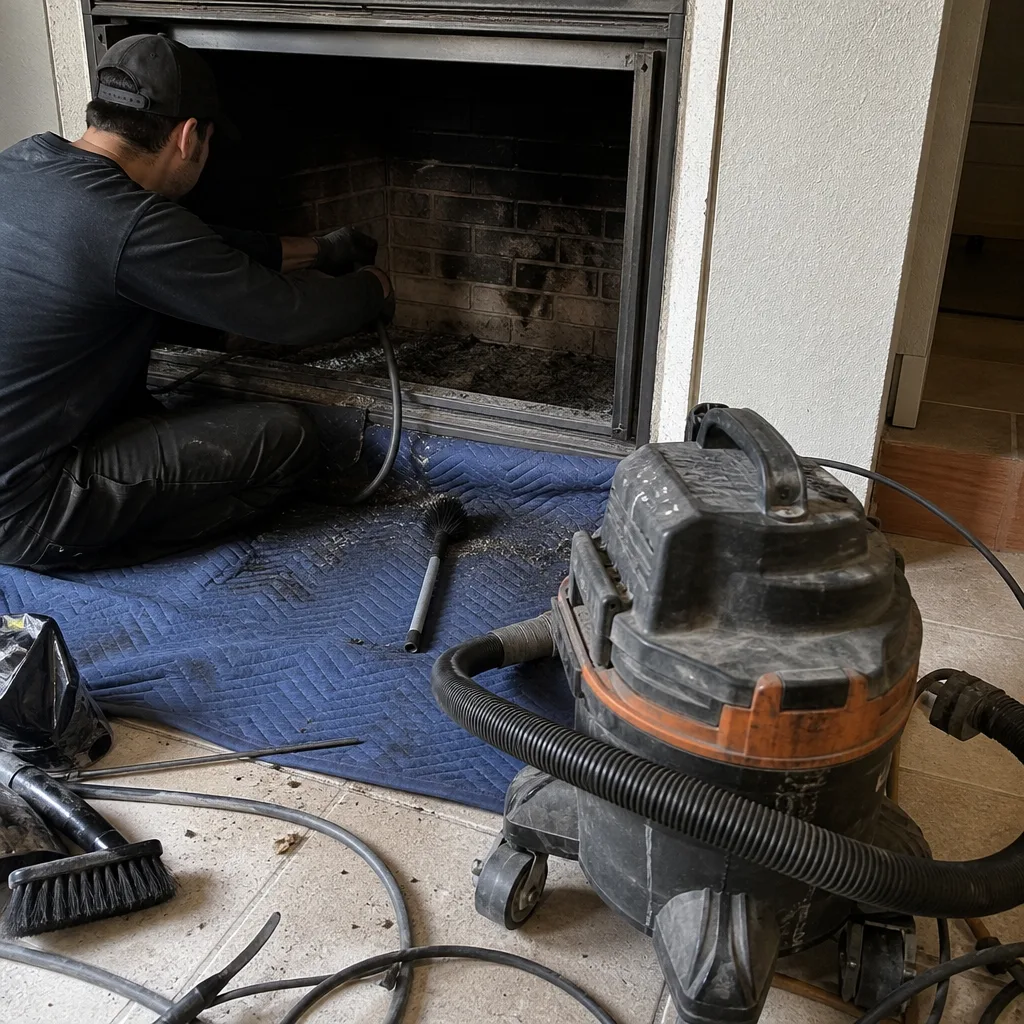 Before
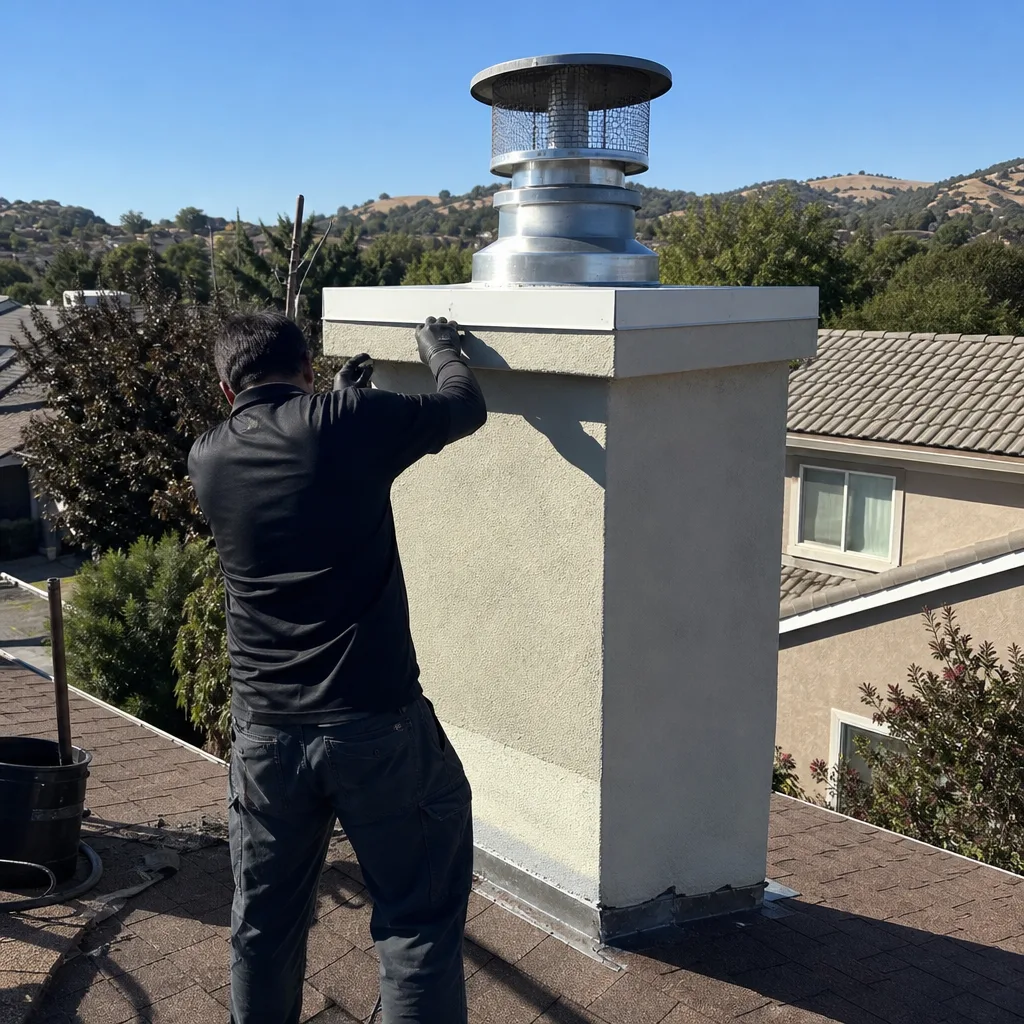 After
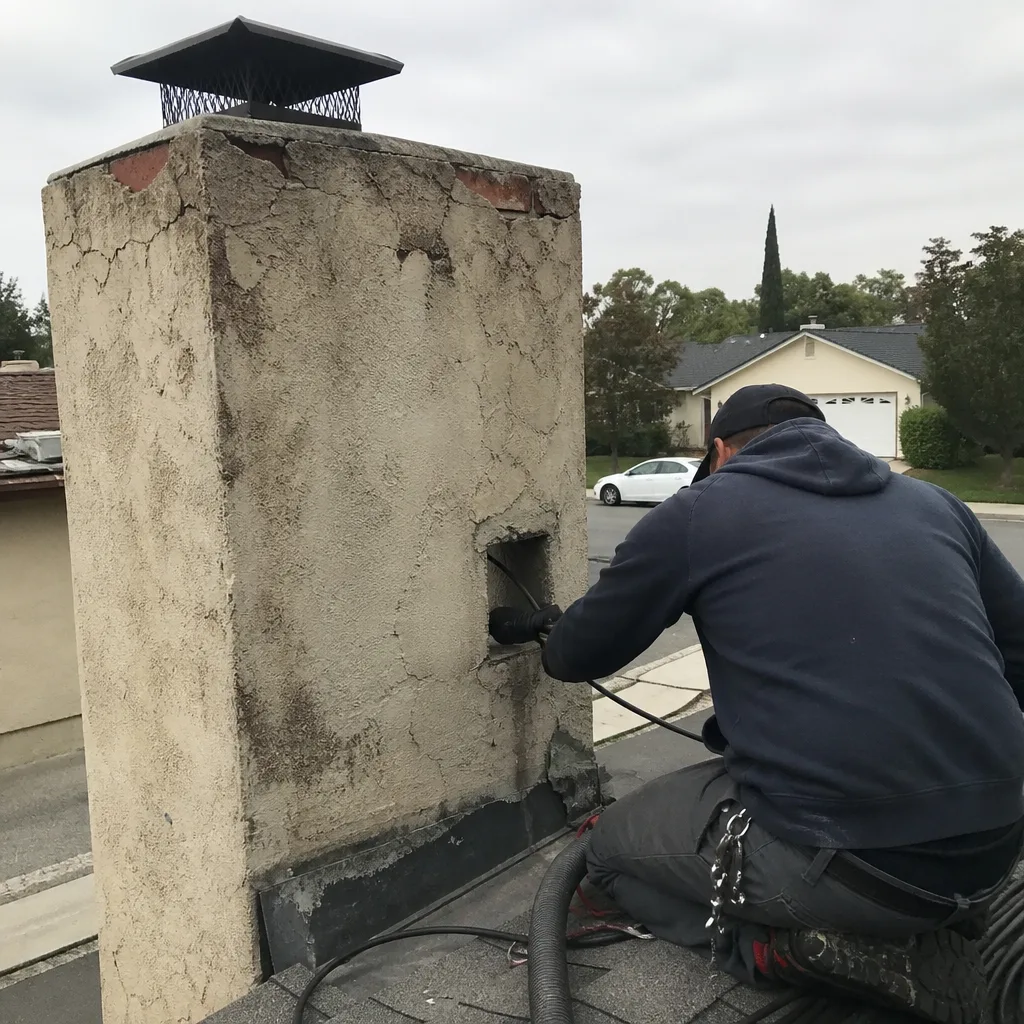 Before
 After
 Before
 After