
Last updated November 2, 2026
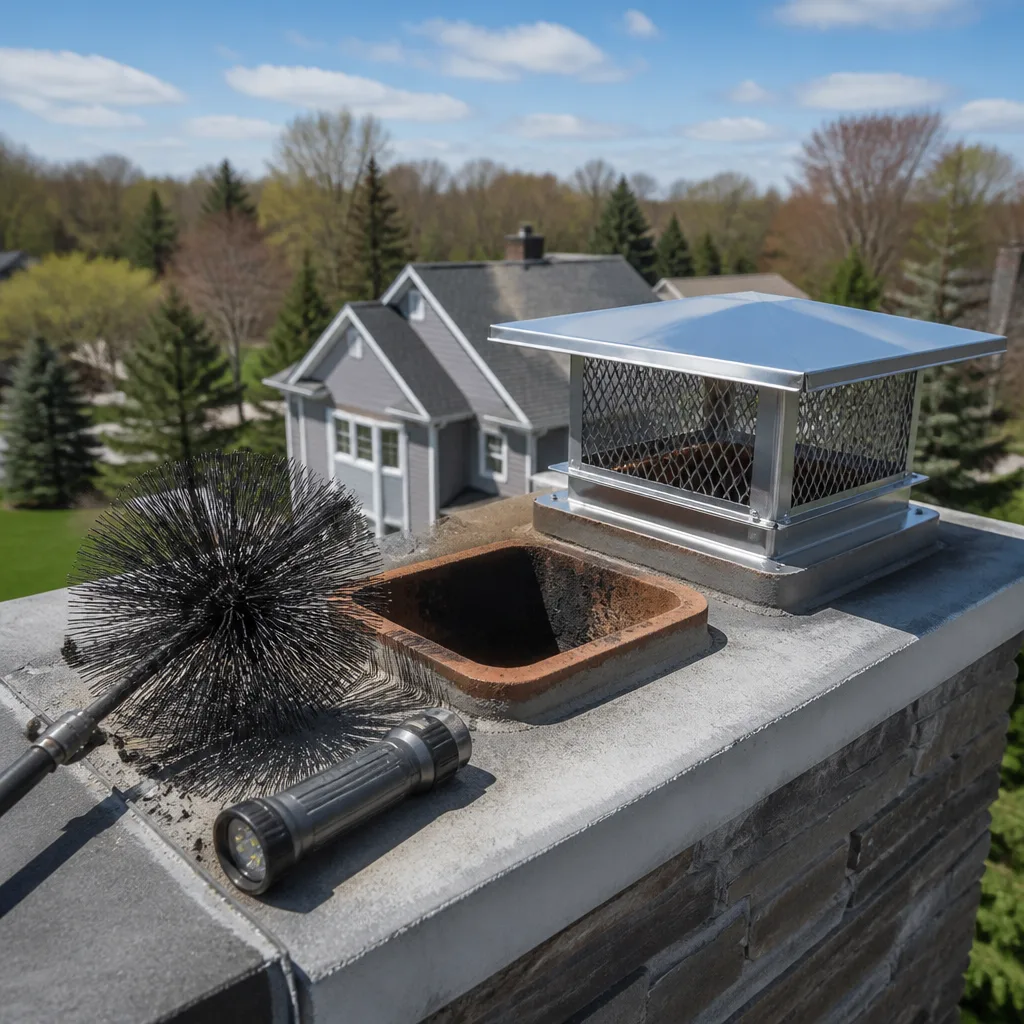 Sweep & inspection
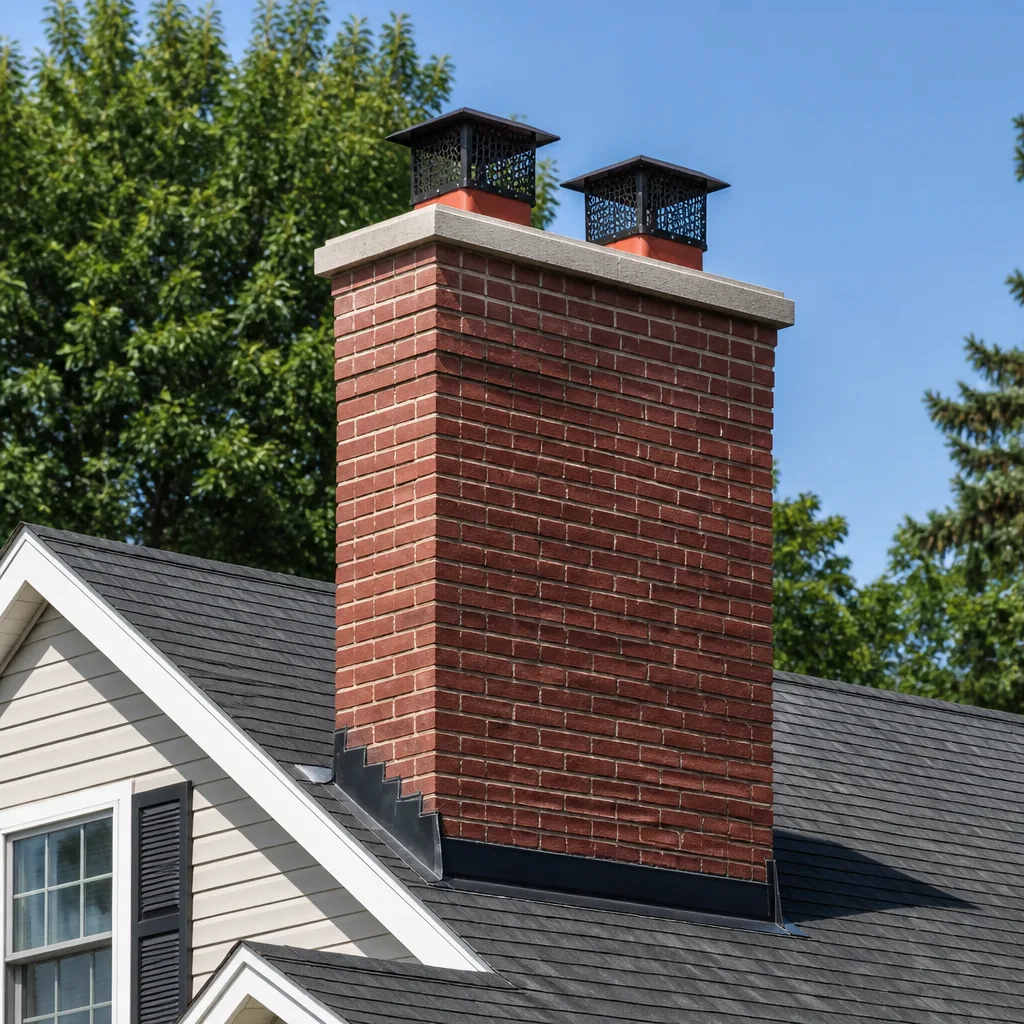 Caps & crowns
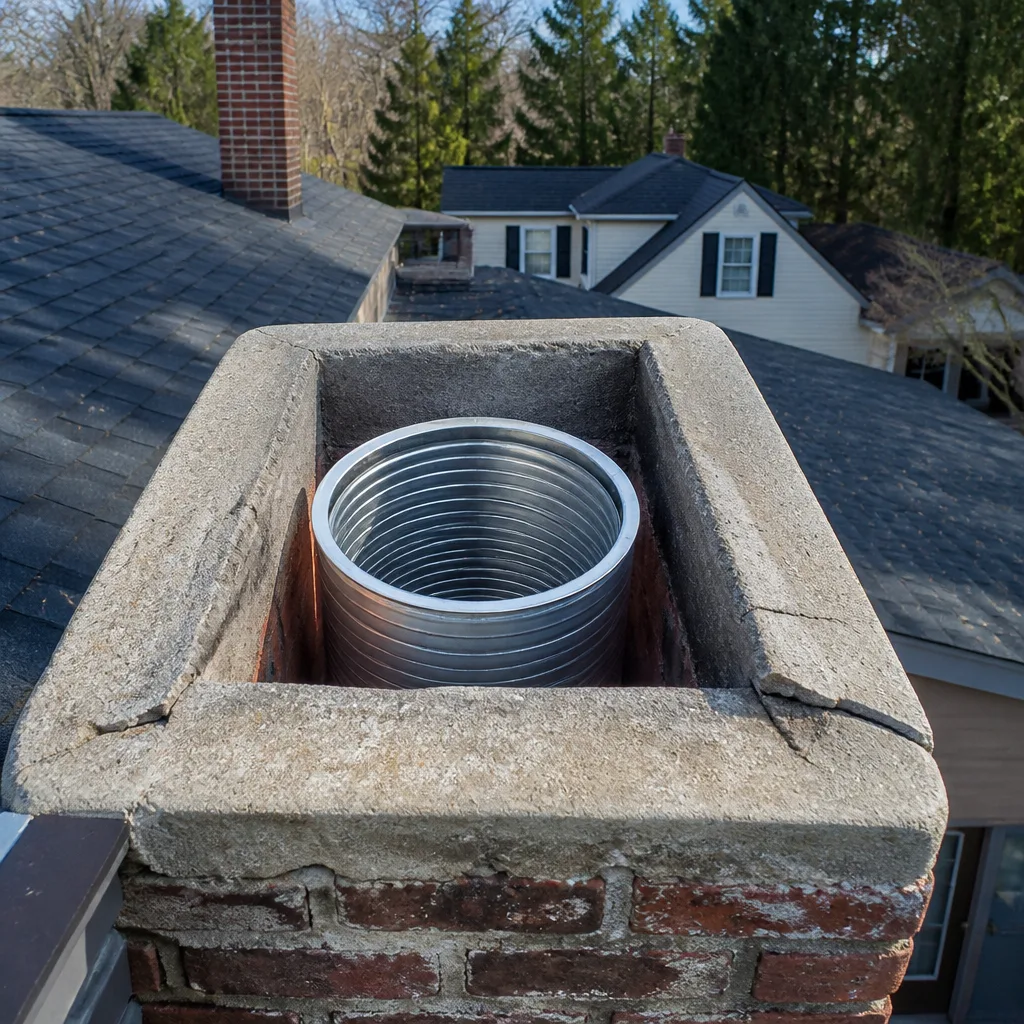 Flue relining
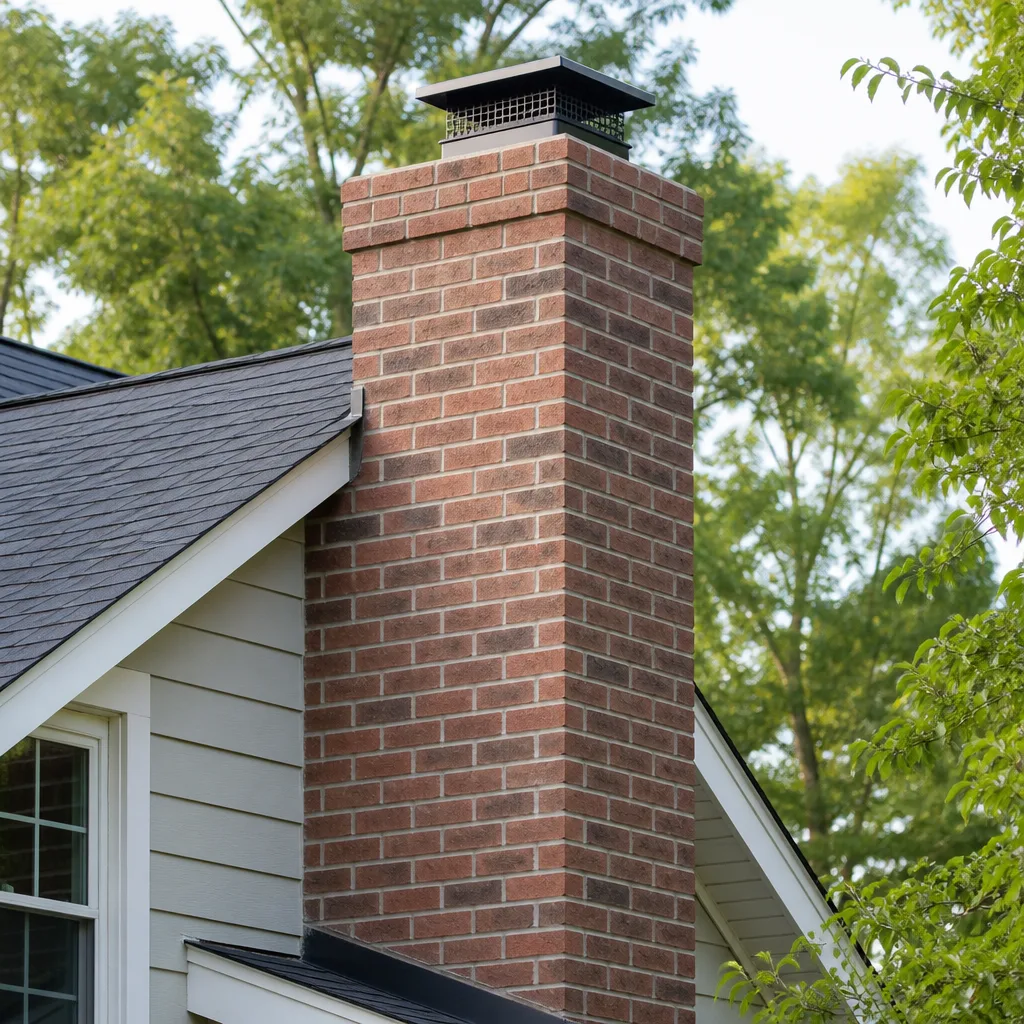 Masonry repair
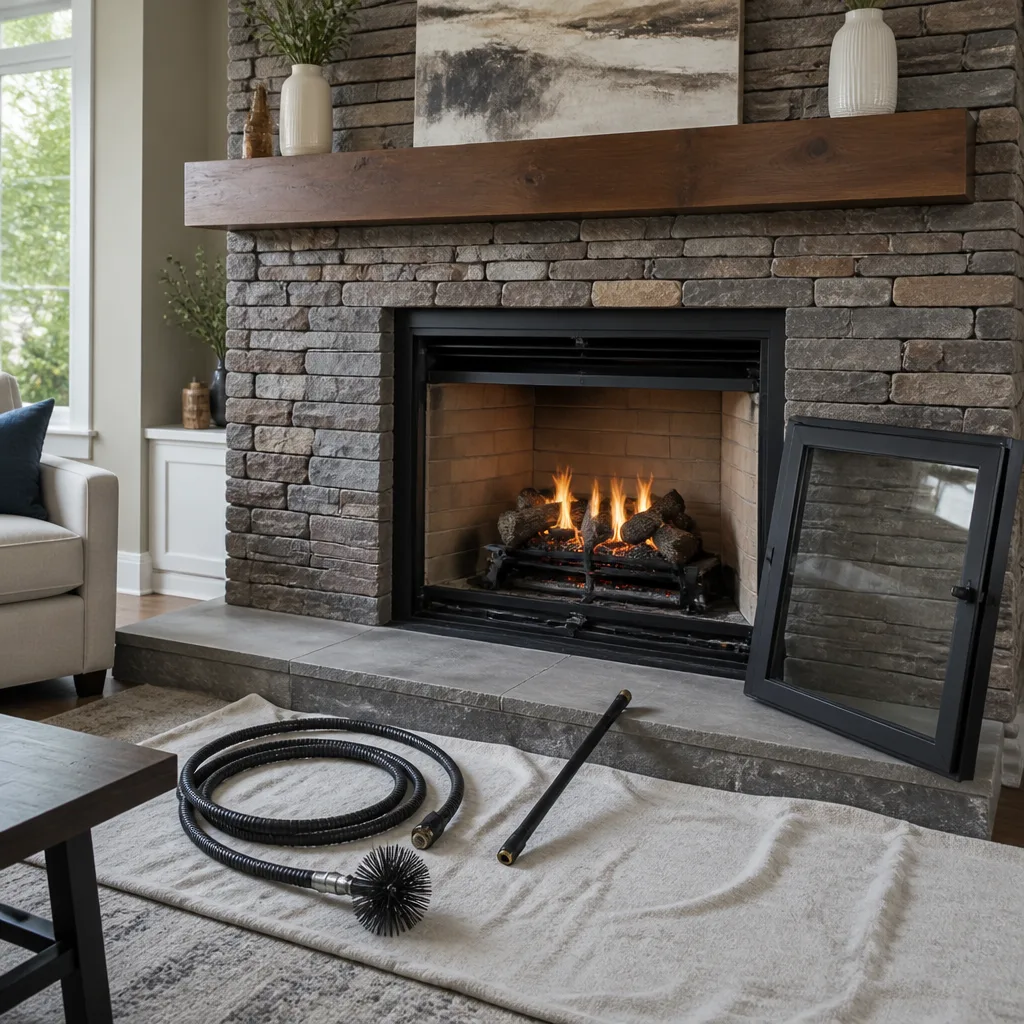 Gas fireplace service
Level 1 sweep and inspection to the NFPA 211 annual standard - flue, crown, cap, and flashing checked and photographed
Chimney sweep logs do not sweep chimneys. They loosen some creosote - which then falls where a brush and vacuum still have to collect it.
Chimney Sweep Maintenance Checklist for Berryessa Homeowners
Most chimney checklists floating around the internet were written for a generic house in a generic climate. They tell you to glance at your chimney once a year and call it good. But Berryessa chimneys don’t age generically. We’re in a pocket of the East Bay where seismic activity shifts masonry by millimeters, marine-layer moisture works its way into hairline cracks, and plenty of homes date back to the 1960s and 70s with original fireboxes that have seen decades of thermal cycling. A 4.0 tremor doesn’t knock your chimney over, but it can open a crack in the crown that grows through one rainy season and becomes a water intrusion problem by the next. This checklist is built for how chimneys actually deteriorate in Berryessa, and it separates what you can evaluate from the ground from what needs a camera, a professional-grade light, and a trained eye.
Quick Answer
A chimney maintenance checklist for Berryessa homeowners should cover eight components: firebox floor and walls, smoke shelf, damper, flue liner, smoke chamber, crown, cap, and exterior masonry joints. Homeowners can visually assess the crown, cap, exterior brick, and firebox from the ground or hearth, but the smoke shelf, flue liner, and smoke chamber require a camera inspection to evaluate accurately. Log every observation with a date so your sweep can compare findings visit to visit and catch deterioration trends before they become structural or fire-safety problems. For more guidance, see our Chimney Sweep services.
Styles & brands we work with
- Sweep & inspection
- Caps & crowns
- Flue relining
- Masonry repair
- Gas fireplace service
Table of Contents
- The Component-by-Component Checklist
- Berryessa-Specific Inspection Triggers
- What You Can Self-Assess Versus What Needs a Camera
- How to Log and Date Observations
- What “Passing” Looks Like on Each Component
- Seasonal Timing for Berryessa Chimney Maintenance
- Common Mistakes to Avoid
- When to Call a Professional
The Component-by-Component Checklist
Every chimney has nine distinct areas that age at different rates. A maintenance checklist only works if you evaluate each one separately instead of lumping everything into “the chimney looks fine.” Here’s what to look at, in the order a sweep does when they work from the firebox up to the cap.
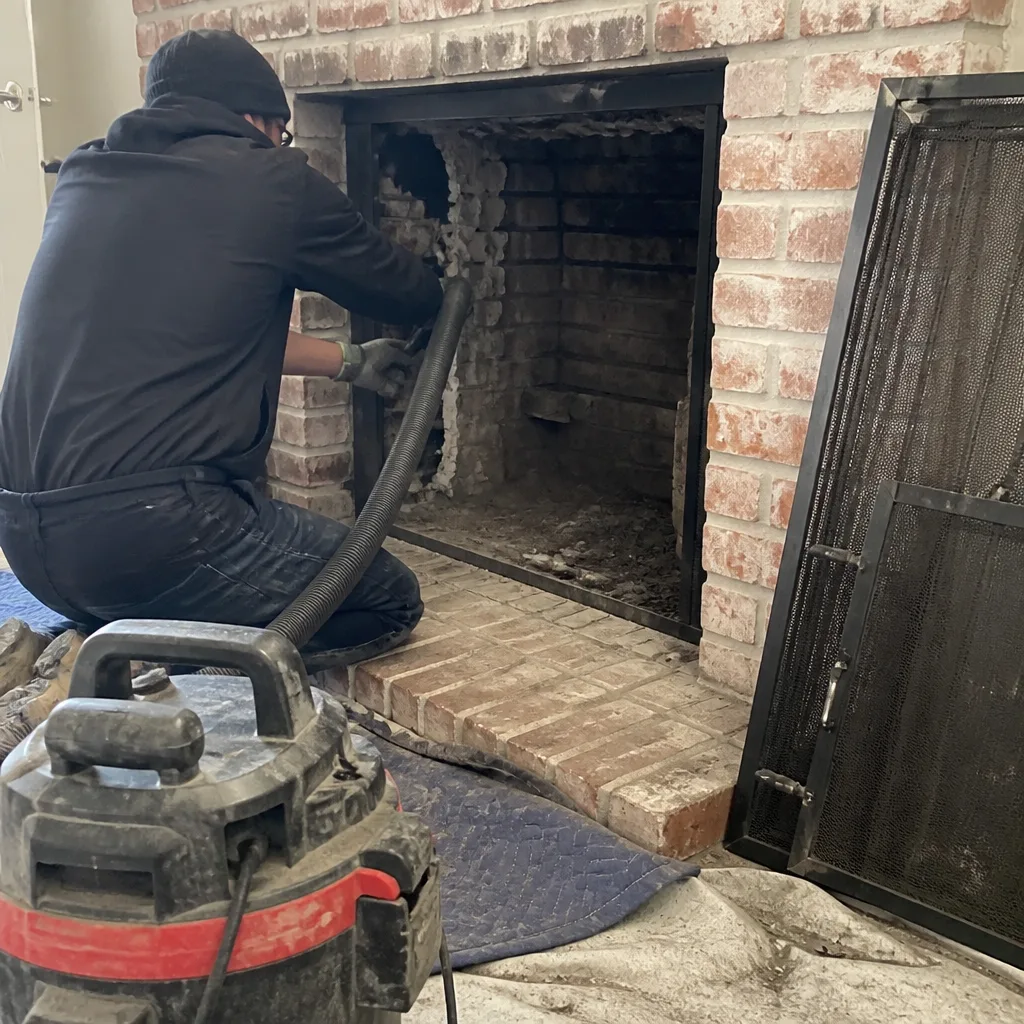
- Firebox floor and walls. The firebox is the chamber where the fire actually burns. Look for cracked firebrick, deteriorating mortar joints, and any gaps where the floor meets the walls. Hairline cracks in firebrick are normal after years of thermal expansion. Gaps wide enough to fit a nickel are not. A failing firebox floor lets heat reach combustible materials beneath the chimney, and that’s a fire hazard that can’t wait.
- Smoke shelf. The smoke shelf sits just above the damper and catches falling debris while helping direct smoke up the flue. You can’t see it from the hearth. A mirror and flashlight angled upward can sometimes give you a partial view, but a camera inspection is the only reliable way to check for debris buildup, creosote accumulation, or cracked masonry. The smoke shelf is one of the most common places for creosote to collect because it’s difficult to reach with basic sweeping tools.
- Damper operation. Open and close the damper and listen. It should move smoothly without grinding, and it should seal firmly when closed. A damper that won’t fully open forces smoke back into the room. One that won’t fully close lets heated air escape up the flue year-round and lets cold air, moisture, and even animals in when the chimney isn’t in use. In Berryessa, a damper that’s rusted from marine-layer moisture is a common find on chimneys that haven’t been used in a while.
- Flue liner. The liner protects the chimney masonry from heat and corrosive combustion gases. Clay tile liners crack from thermal stress and from the subtle shifting Berryessa earthquakes cause. Stainless steel liners, including DuraFlex systems, can corrode or separate at the seams if they were poorly installed. Cracked clay tiles or separated liner sections can’t be evaluated from the ground. This one always requires a camera.
- Smoke chamber. The smoke chamber is the funnel-shaped transition between the firebox and the flue liner. In older Berryessa homes, the smoke chamber is often corbeled brick with rough, jagged surfaces that catch creosote. A parged, smooth smoke chamber resists buildup. If yours has never been parged, expect heavier creosote accumulation and more frequent sweeping needs.
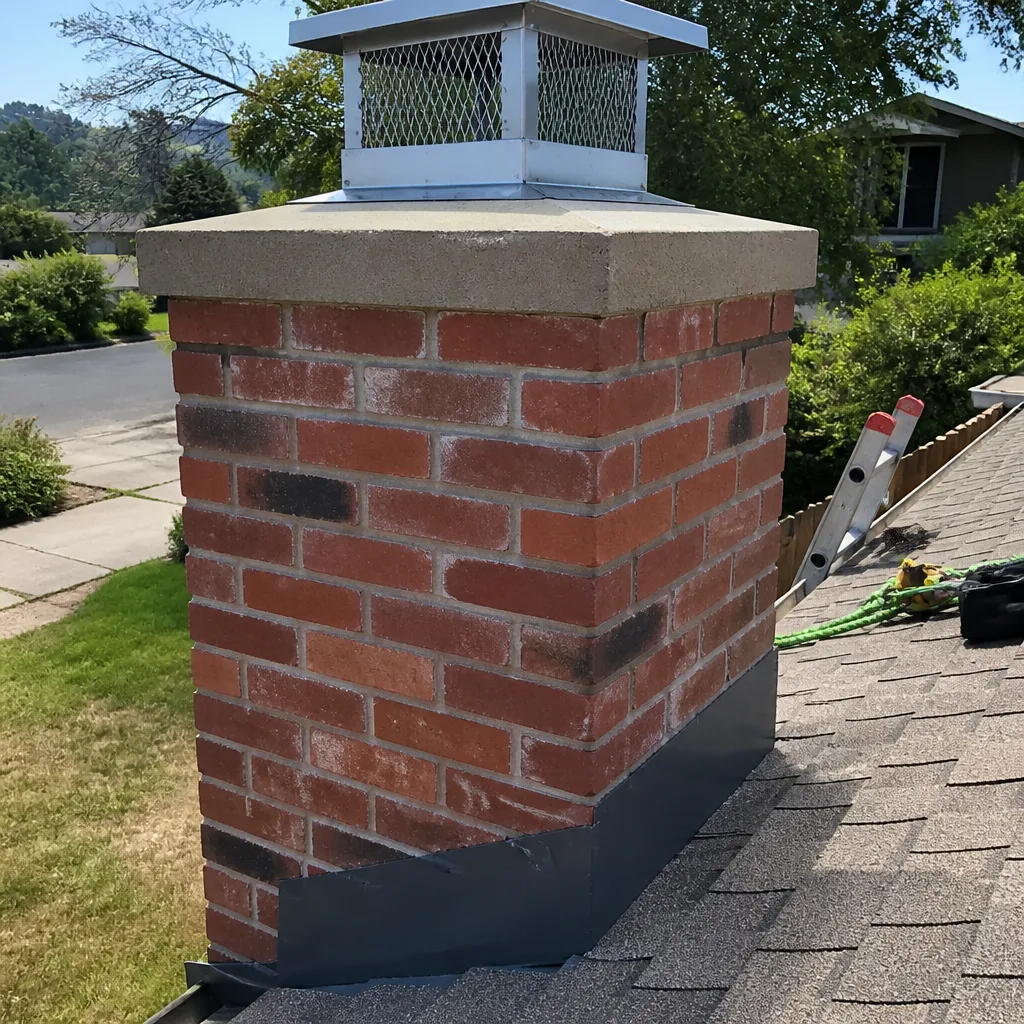
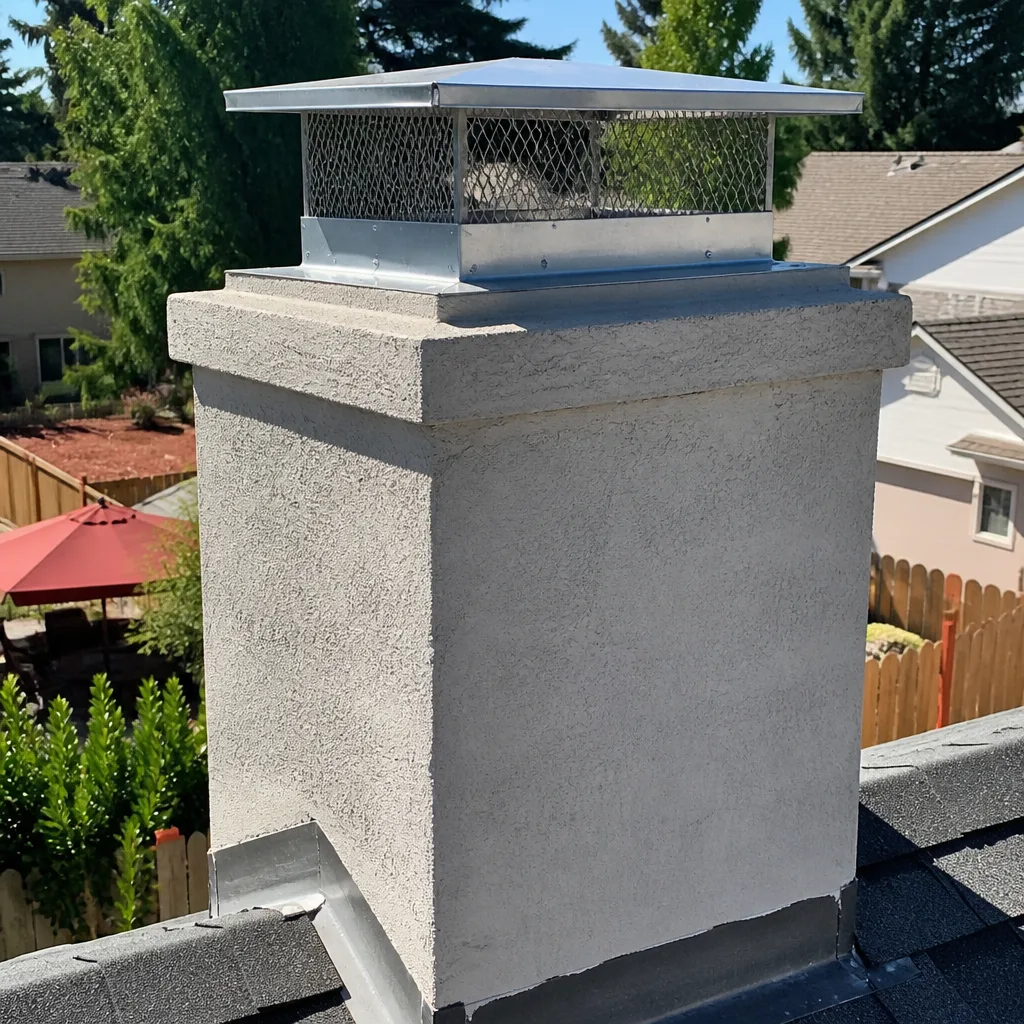
- Crown. The crown is the concrete slab that caps the top of the chimney and sheds water. Look for cracks, especially hairline cracking that runs from the flue opening toward the edges. A cracked crown lets water into the masonry chase, and in Berryessa’s wet-winter dry-summer climate, that water freezes nowhere but works its way through mortar joints all winter long. Crown repair is relatively inexpensive compared to rebuilding a water-damaged chimney.
- Cap. The cap sits over the flue opening and keeps rain, leaves, and animals out while allowing smoke out. A missing or damaged cap is an open invitation. In Berryessa, we see raccoons and squirrels nesting in uncapped flues more often than most people would believe. A spark-arrestor cap does double duty by catching embers before they can reach your roof or dry vegetation.
- Exterior masonry joints. Step back and look at the mortar between bricks. Crumbling, eroded, or missing mortar is called spalling, and it’s the earliest warning sign of water intrusion. Run a visual check after heavy rain. Dark vertical streaks on the chimney exterior mean water is running down the inside of the masonry, not the outside surface.
- Chase and flashing. The flashing is the metal where the chimney meets the roofline. Lifted, rusted, or torn flashing lets water drain directly into your attic. Check it from the ground with binoculars or from a ladder if you’re comfortable. This is one area where calling a professional is often the right call rather than climbing on a Berryessa roof yourself.
Berryessa-Specific Inspection Triggers
A yearly calendar of checks is useful. But Berryessa homeowners should also run through this checklist after certain specific events. Here are the local triggers that matter more in this area than they do elsewhere.
Post-earthquake checks. Any measurable earthquake, meaning anything above roughly a 3.5, should trigger a chimney inspection. Most of the damage from seismic movement is invisible from the ground. Interior brick cracks, shifted flue tiles, and separated liner sections are all things we’ve seen after moderate East Bay earthquakes. The shaking itself may not do dramatic damage, but it can open the kind of hairline cracks that then absorb moisture for years until the problem becomes obvious. If you felt it indoors, check the chimney.
Post-storm debris inspection. After any storm with wind above 30 miles per hour, take a look at your cap. Berryessa gets enough wind off the bay and over the hills that branches, leaves, and even roofing debris can end up on top of or inside your chimney. If your cap is missing or damaged, a single windy night can fill your smoke shelf with dry leaves that become kindling for your next fire.
End-of-summer assessment. The best time to sweep a chimney in the East Bay is late summer or early fall, before the first fire of the season. In Berryessa, that means September to early October. The flue has had months to dry out, which makes creosote removal easier and more complete. It also gives you time to schedule repairs before heating season, when chimney companies get busy.
Spring moisture check. After the rainy season ends, usually April or May, look at your chimney from the ground. Dark streaks, efflorescence, which is the white powdery mineral deposit that appears on wet masonry, or any visible water staining on interior ceilings near the chimney all point to water intrusion that winter exposed. If you catch it in spring, you have the whole dry season to repair it properly.
What You Can Self-Assess Versus What Needs a Camera
Some chimney components are meant to be checked by homeowners. Others genuinely require a camera or professional-grade equipment, not because the work is difficult, but because you physically cannot see the surfaces in question. Knowing the difference saves you from false confidence and from paying for inspections you could do yourself.
You can self-assess these from the ground or hearth:
- Exterior masonry and mortar joints, using binoculars if you don’t want to climb a ladder
- Crown cracks visible from a ladder or with a zoom lens
- Cap presence and general condition, from the ground with binoculars
- Firebox floor and walls, from inside the hearth with a flashlight
- Damper operation, by opening and closing it manually
- Visible flashing at the roofline, from a ladder or the roof edge
These require a camera, professional-grade light, or both:
- Flue liner condition, including clay tile cracks or metal liner seam separation
- Smoke shelf debris and creosote levels
- Smoke chamber mortar condition and buildup
- Any part of the flue past the first bend
- Interior water damage inside the masonry chase
If you’ve done your visual checks and everything looks fine from the outside, a professional camera inspection is still worth doing every two to three years, or annually if you burn more than a cord of wood per season. Learn more in our Chimney Sweep Troubleshooting: Common Problems and How to Fix Them guide. It’s the only way to see what’s happening in the middle of your chimney. We regularly find cracked flue tiles in Berryessa chimneys whose exterior masonry looked perfectly fine from the curb.
How to Log and Date Observations
A single inspection gives you a snapshot. Multiple inspections give you a trend. And trends are what tell you whether a crack is stable or growing, whether creosote is building faster this year than last, and whether a water stain is old or active. The simplest log in the world is more useful than the most detailed memory.
Here’s a straightforward logging method that doesn’t require any special tools or apps:
- Date every observation. Even if it’s the only thing you write down, the date makes it useful. “Crack in crown left side, 2 inches, October 2024” followed by “Same crack, 2.25 inches, March 2025” tells you something is moving.
- Note conditions when you observed. Was it after a heavy rain? In the middle of summer after the flue had dried for months? During a cold snap? Conditions change what you’re seeing. Creosote looks different in a cold, damp flue than it does in a warm, dry one.
- Describe location precisely. “Crack in firebox floor near the back left corner, about 4 inches from the side wall” is actionable. “Firebox has cracks” is not. Use consistent reference points so future you knows exactly what past you was looking at.
- Use a smartphone photo. Take a photo of anything you note, from the same angle each time, with the date stamped or stored in the filename. Photos reveal changes your eye filters out. A photo of a crack in the mortar in May and the same photo in November tells you how fast it’s moving.
- Bring your log to every professional inspection. When you schedule a sweep, show the technician your notes. A good sweep will compare your observations to what they see with the camera. Your log and their camera combined catch more than either one would alone.
Over time, this log becomes the history of your chimney. For a typical Berryessa home built in the 1970s with its original firebox, that history is the difference between catching a failing liner early and discovering it after a chimney fire.
What “Passing” Looks Like on Each Component
You can’t know something’s wrong if you don’t know what right looks like. Here’s what a healthy, functioning component looks and sounds like, component by component, so you have a baseline for comparison.
- Firebox floor and walls pass when firebrick is intact with no gaps wider than 1/16 inch, and when the floor is solid with no movement when you press on it. Surface hairline cracks are normal. Movement or spalling brick is not.
- Smoke shelf passes when it has no more than a light dusting of soot and no creosote buildup thicker than 1/8 inch. You won’t know this without a camera inspection, which is part of the point.
- Damper passes when it opens fully with one smooth push and closes with a firm thud. No grinding, no resistance, no wobble.
- Flue liner passes when the camera shows continuous, intact surface with no cracks, gaps, or separated joints. A DuraFlex stainless liner passes when all seams are intact and the liner is properly sized for the appliance it serves.
- Smoke chamber passes when the surface is smooth and creosote is minimal. In older Berryessa chimneys, a rough corbeled smoke chamber can still pass if creosote is swept before it exceeds 1/4 inch, but a parged chamber is the standard to aim for.
- Crown passes when there are no visible cracks and water beads on the surface rather than absorbing. Any crack, even a hairline, is technically a fail because water will find it.
- Cap passes when it covers the flue opening completely, is securely attached, and has no rust-through or missing spark-arrestor screen. A cap that wobbles in the wind is a fail.
- Exterior masonry passes when mortar joints are full and joints are uniform in color with no crumbling. A few minor surface chips in brick are cosmetic. Eroded mortar that lets rain reach the interior is structural.
If something fails on this pass/fail scale, the severity matters. A slightly cracked crown can be sealed before October. A missing cap should be replaced before the next storm. A cracked flue liner is a fire hazard that should stop you from burning until it’s repaired. Part of a professional sweep’s job is telling you which failures are urgent and which can be scheduled. That distinction is exactly what a checklist alone can’t provide.
Seasonal Timing for Berryessa Chimney Maintenance
In Berryessa, the maintenance calendar follows the Mediterranean climate pattern of the East Bay. When you do each task matters almost as much as doing it.
September to October: Pre-burn season sweep and inspection. This is the single most important maintenance window. The flue is dry from summer, creosote is easier to remove, and you have time to schedule repairs before the first fire. If you only schedule one professional visit per year, make it between Labor Day and mid-October. That’s also the window when the team at Chimney Sweep in Berryessa recommends scheduling sweeps for wood-burning fireplaces.
November to February: In-season monitoring. During burning season, do a quick visual check of the firebox before each fire. Look for any new cracks, any signs of smoke backing up, or any unusual smell. A smoky fireplace that used to draw fine is a signal that something changed, usually creosote buildup or an obstruction.
March to April: Post-season inspection. After the last fire of the season, inspect everything you can see with a flashlight. This is the best time to note any damage the burning season caused and to check for water intrusion from winter rains. If you see water staining near the chimney inside your house, this is when it will show up.
May to August: Repair season. The dry season is when masonry and crown repairs should happen. Mortar needs dry conditions to cure properly. If you discover a problem in the spring, schedule the repair for summer. That’s also a good time to have Chimney Repair in Berryessa handle structural work while the weather cooperates and before the fall rush.
Dryer vent maintenance year-round. Dryer vents are a separate system but a related fire risk. The National Fire Protection Association lists failure to clean dryer vents as a leading cause of dryer fires, and most homeowners never think about it until the dryer takes two cycles to dry a load. If your dryer vent has never been cleaned, or you can’t remember the last time, schedule a Dryer Vent Cleaning in Berryessa visit. Ideally, do this once a year if you do regular laundry for a family, or every two years for lighter use.
Common Mistakes to Avoid
- Assuming a wood-burning chimney doesn’t need sweeping if you only use it a few times a year. Creosote accumulates by fire, not by season, and even a handful of fires can create enough buildup to ignite. Most chimney fires happen in flues that haven’t been swept in years, regardless of how often the fireplace is used.
- Checking the crown from the ground and calling it good. Hairline cracks are invisible from 20 feet below, especially in Berryessa’s flat morning light. A crown that looks fine from the ground can be cracked wide enough to soak the masonry chase every time it rains.
- Skipping the post-earthquake check because “the house is fine.” Houses are built to flex. Chimneys aren’t. A 4.0 quake may do nothing to your drywall and still crack a flue tile. If you felt it, check it.
- Burning pine or other resinous wood because it’s all that’s available at the local market. Pine and fir produce heavy creosote, especially when burned at low temperatures. In Berryessa, burning unseasoned softwood in a cold, damp flue can create a thick, sticky creosote that’s harder to remove and more flammable than the flaky kind.
- Using the fireplace despite a cracked firebox floor because “the fire is on the grate, not the floor.” Heat transfers. A cracked firebox floor allows heat to reach the wood framing beneath the firebox, and that’s exactly how slow-burning structural fires start.
- Hiring a sweep who doesn’t use a camera. A visual sweep without a camera inspection only cleans the parts of the chimney the sweep can see. The flue liner and smoke shelf, where most problems live, remain uninspected. Ask before you book whether the inspection includes a camera. Any technician worth hiring will say yes without hesitation.
- Putting off dryer vent cleaning because “it’s just lint.” Lint is fuel. A clogged dryer vent forces the dryer to run hotter, and that heat can ignite the lint in the vent. The NFPA lists failure to clean as a leading cause of dryer fires, and it’s one of the most preventable household fire risks there is.
When to Call a Professional
Call a professional when you see movement, cracks wider than a hairline, missing caps, water staining inside the house near the chimney, or when your fireplace suddenly draws poorly. Call after any earthquake you felt indoors. Call if a camera inspection is needed, which means flue liner, smoke shelf, and smoke chamber evaluation. Call if you see rusted or torn flashing, since that can require roof access that’s not worth doing yourself. If you have a gas fireplace, call for an annual safety check even if you rarely use it, because venting issues with gas appliances are less visible and more dangerous than wood-burning problems. Chimney Sweep Berryessa home services cover sweeping, repair, and dryer vent cleaning, so one call at (877) 610-3049 gets you a free estimate for any of these issues in Berryessa.
See the difference
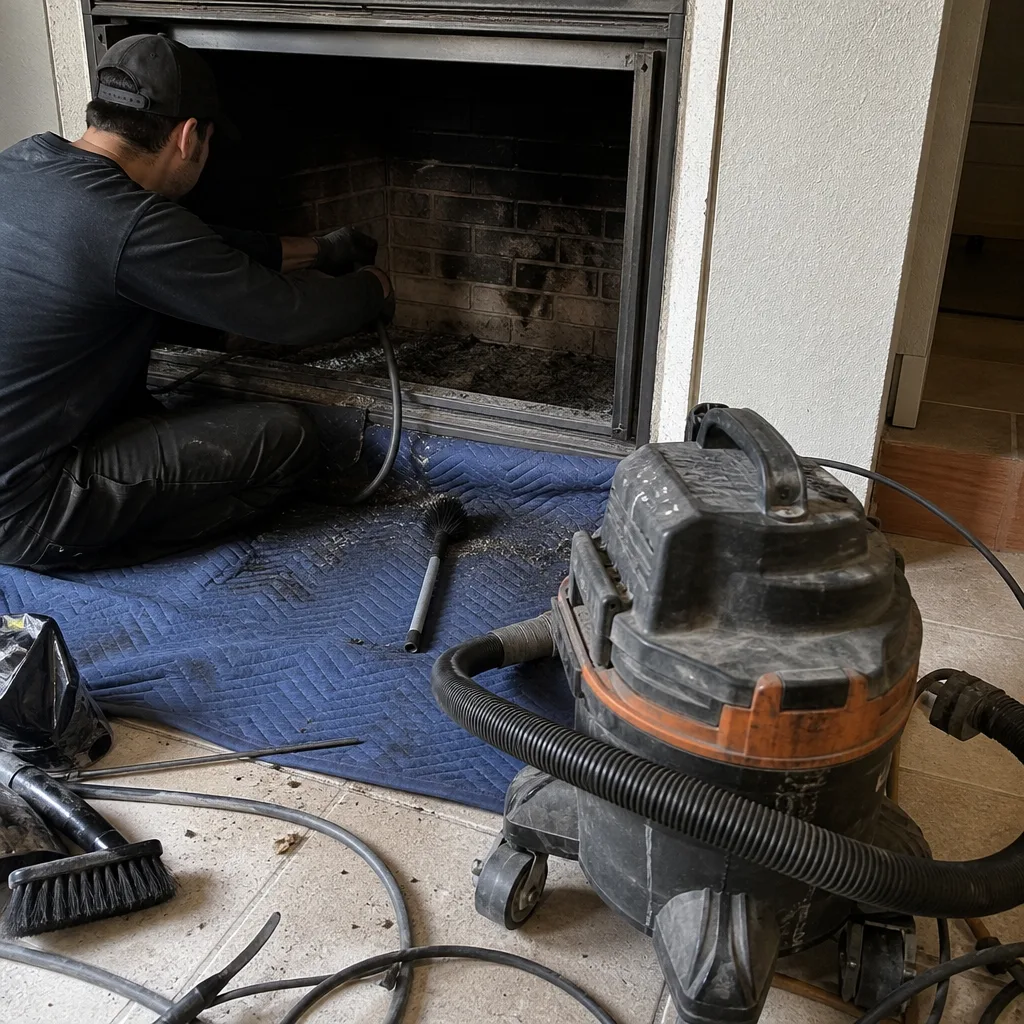 Before
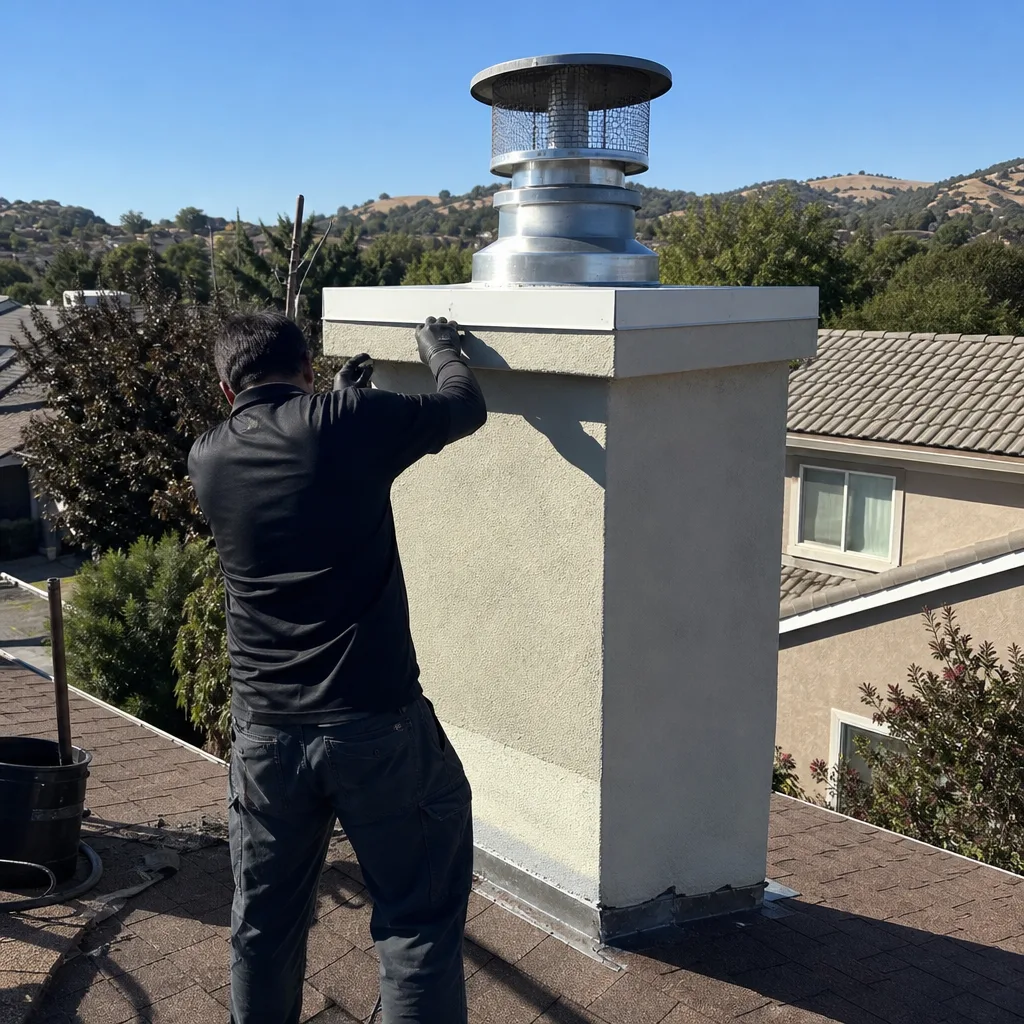 After
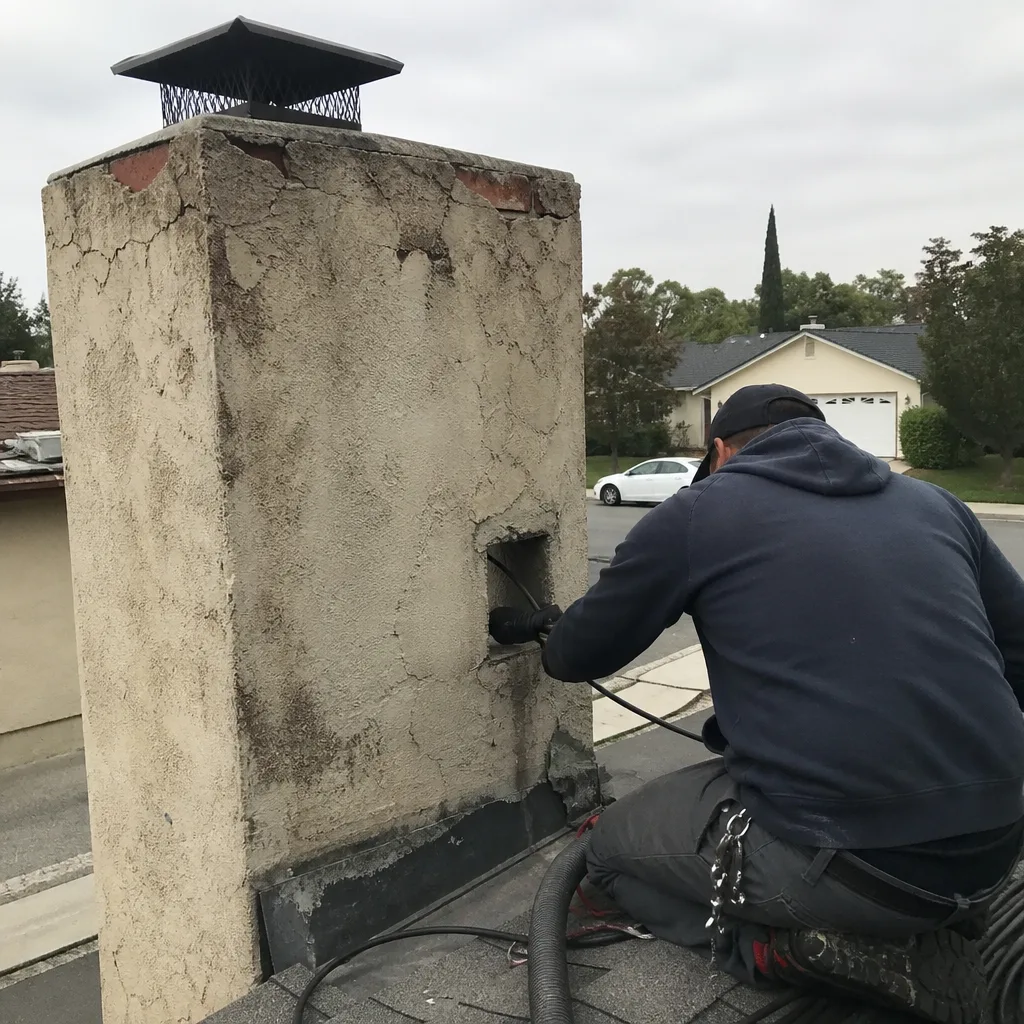 Before
 After
 Before
 After
Frequently Asked Questions
A wood-burning chimney should be swept after every cord of wood burned, or at minimum once per year even with light use. For help selecting products, read Choosing the Right Chimney Cleaning Brand: A Buyer’s Guide for Berryessa. In Berryessa, most people burn half a cord or less per season, which means an annual sweep before October is the right cadence for most homes. Gas fireplaces should be inspected and serviced annually, even though they don’t produce creosote, because venting problems with gas are harder to see but more dangerous if they develop. Call (877) 610-3049 for exact scheduling based on your burning habits.
A standard chimney sweep and inspection in Berryessa typically runs $180 to $320, depending on the level of creosote buildup, chimney height, and whether a camera inspection is included. Structural repairs, crown sealing, and liner work are additional and priced after diagnosis. Call (877) 610-3049 for an exact quote; estimates are free and include a written breakdown.
You need a new liner if the camera inspection shows cracked tiles, separated seams, or corrosion that allows heat or combustion gases to reach combustible materials. If the liner is intact but has minor surface damage, options like HeatShield resurfacing may be appropriate instead of full replacement. No reputable company will recommend a new liner without showing you the footage, and you should ask to see it. Call (877) 610-3049 to schedule a camera inspection if you suspect liner damage.
Creosote builds up with every fire. At about 1/4 inch of thickness, creosote becomes a fuel source for a chimney fire, which can reach 2,000 degrees and destroy the flue liner, crack masonry, and spread to the house. At lower levels of buildup, you may notice smoke backing up, a stronger smell, and reduced draw, but the fire risk is why sweeping can’t be skipped. Most chimney fires in Berryessa homes are in chimneys that haven’t been swept in three or more years.
No, but it still needs maintenance. Gas fireplaces don’t produce creosote, but they do produce acidic condensation that corrodes flue liners over time, and they rely on proper venting to keep carbon monoxide out of your home. An annual service includes checking the venting, testing the damper, and inspecting the firebox and logs. Berryessa homeowners with gas fireplaces should schedule this every fall.
You can remove and clean the lint trap and the first few feet of duct accessible from behind the dryer, and you should do that monthly. But a full vent cleaning requires reaching the entire run of duct, which often runs through walls or under floors and is inaccessible without professional equipment. A partial clean gives false confidence while the far end of the vent stays packed with lint. Call (877) 610-3049 to schedule a full dryer vent cleaning in Berryessa and get a camera verification that the entire run is clear.
The Bottom Line
A chimney maintenance checklist for Berryessa has to be built around what actually happens to chimneys here: seismic movement, marine moisture, and decades-old masonry. Check every component on the list, log what you find with dates and photos, and know which parts you can evaluate yourself and which need a camera. Sweep before October, inspect after earthquakes and storms, and use the dry season for repairs. If you find a problem you can’t identify, call Chimney Sweep Berryessa at (877) 610-3049 for a free estimate. Explore more guides & resources on our blog. One annual sweep plus basic awareness the rest of the year covers the vast majority of what home chimneys need. Clean flue, safe home.
Written by the team at Chimney Sweep Berryessa, serving Berryessa since 2013.