
Last updated November 3, 2026
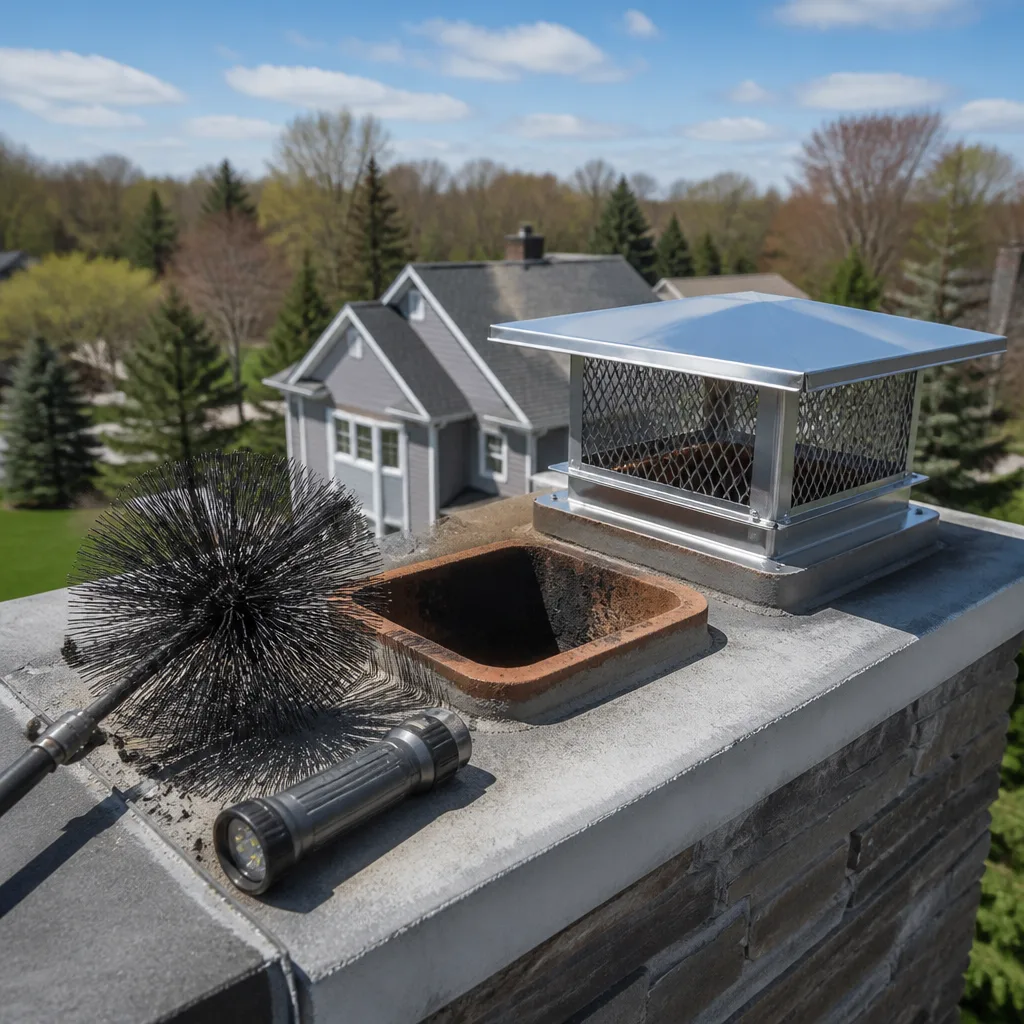 Sweep & inspection
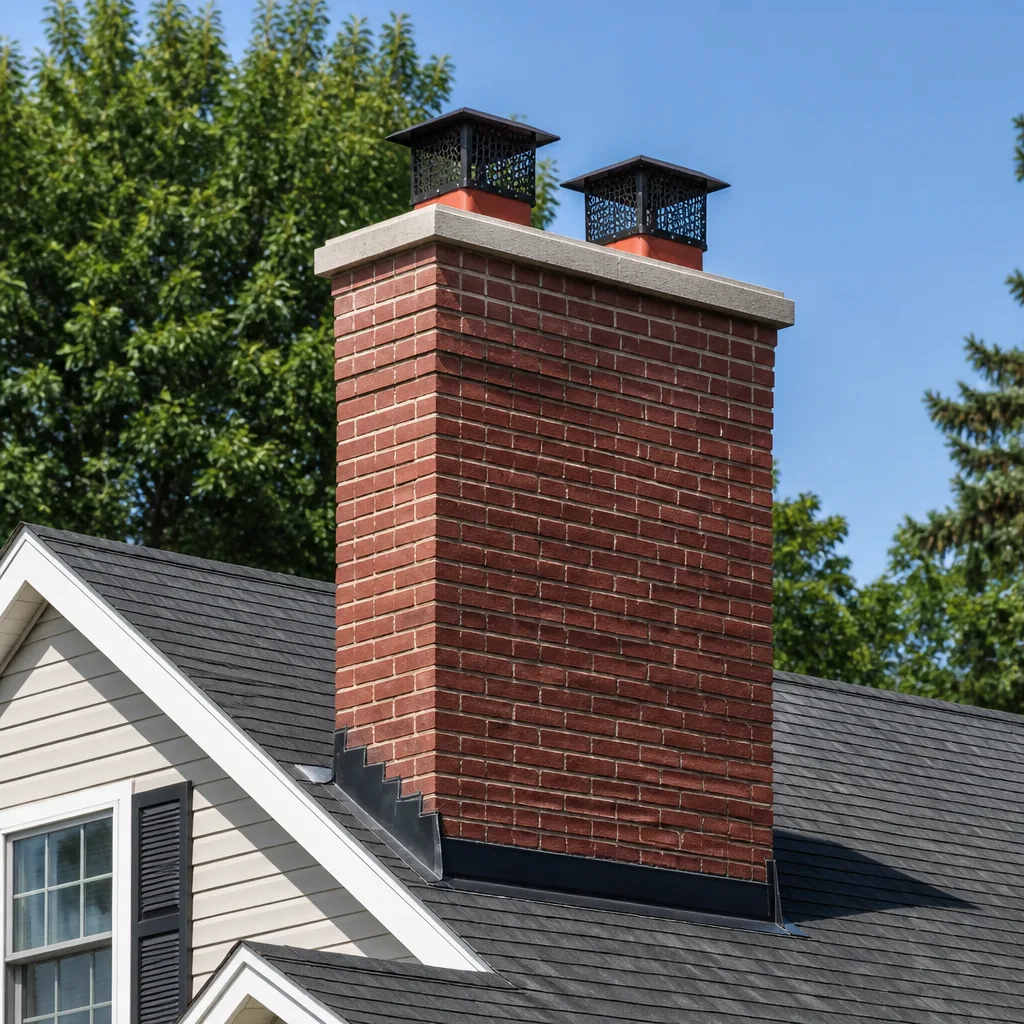 Caps & crowns
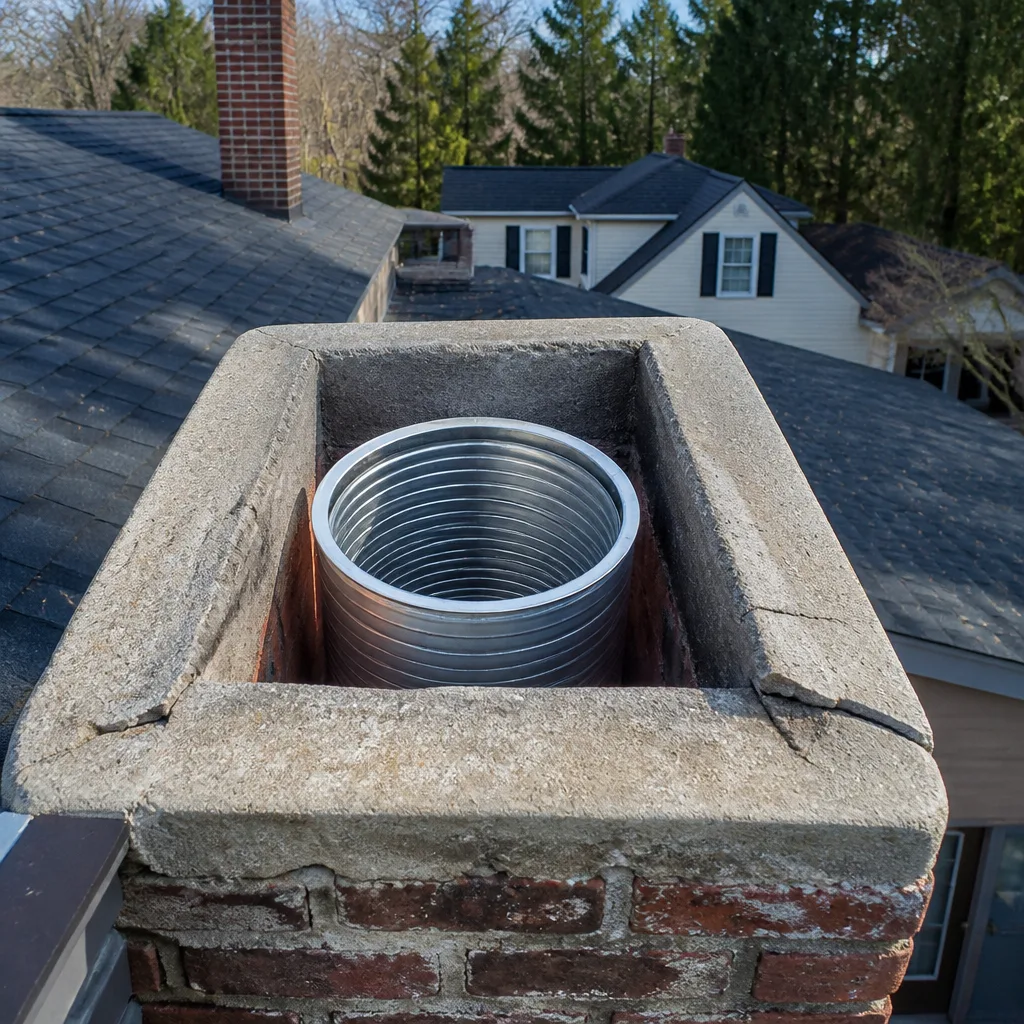 Flue relining
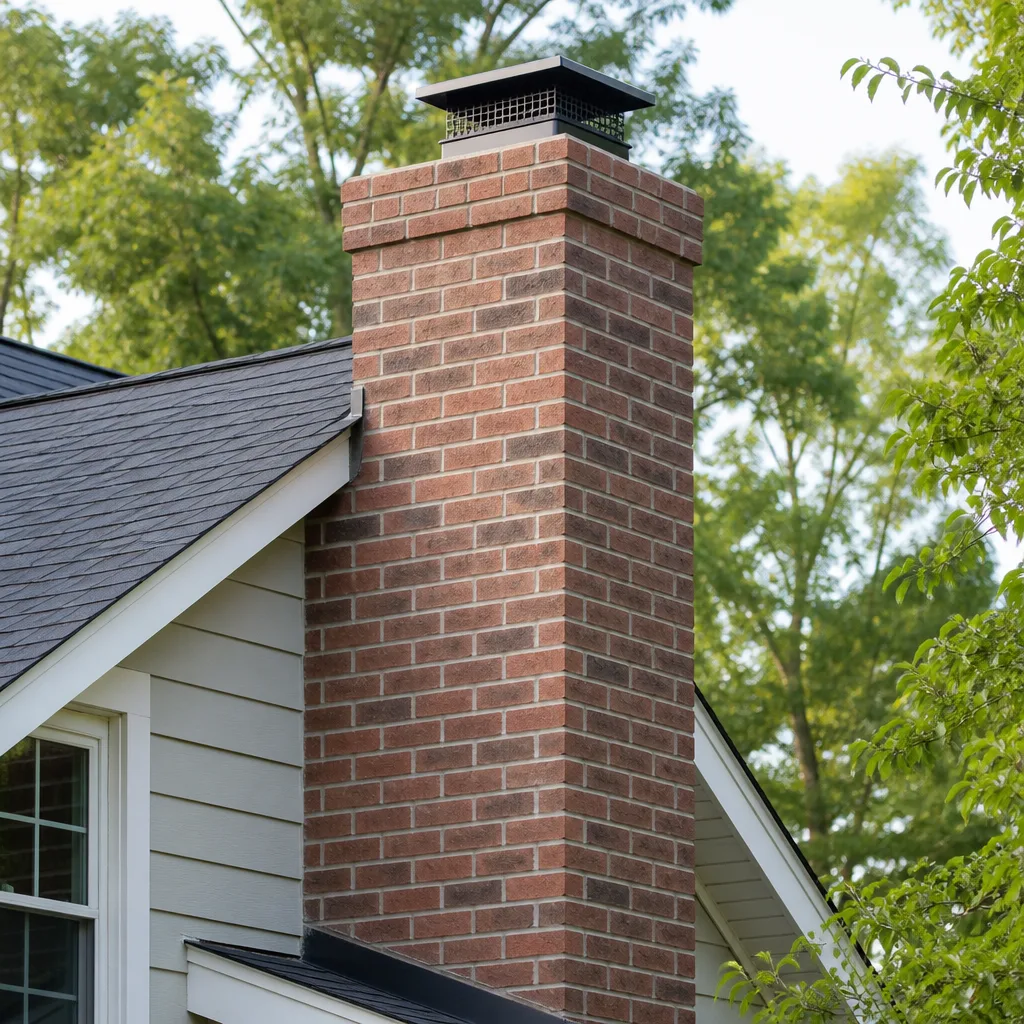 Masonry repair
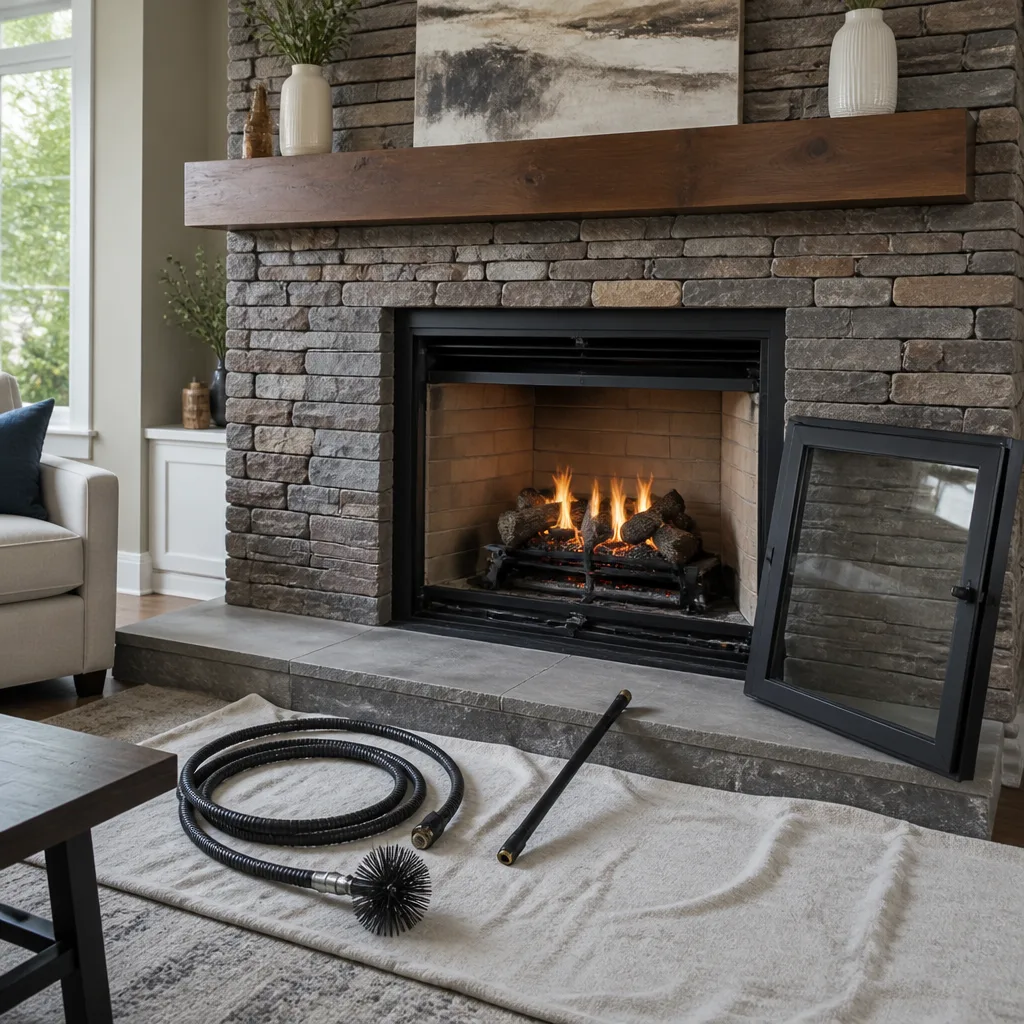 Gas fireplace service
Level 1 sweep and inspection to the NFPA 211 annual standard - flue, crown, cap, and flashing checked and photographed
Chimney sweep logs do not sweep chimneys. They loosen some creosote - which then falls where a brush and vacuum still have to collect it.
The Complete Chimney Sweep Guide for Berryessa Homeowners
Here’s a number that should get your attention: the Chimney Safety Institute of America estimates roughly 25% of chimney fires are caused by defects a sweep would have caught. The catch is that the sweep only catches them if the technician actually inspects beyond the firebox opening, and plenty of companies don’t. That’s the gap this guide closes. We’re going to walk you through every layer of a proper chimney sweep, from cap to ash pit, so that when you book our Chimney Sweep services in Berryessa, you know exactly what a thorough job looks like. By the end, you’ll be able to tell the difference between a real safety inspection and a guy with a brush who left your flue liner unchecked.
Quick Answer
A professional chimney sweep in Berryessa is a multi-step diagnostic process covering the cap, crown, flue liner, smoke chamber, firebox, and ash pit, not just a quick brushing of the flue. For DIY vs Professional Chimney Cleaning: The Berryessa Homeowner’s Decision Guide, understanding this full scope matters. Most Berryessa homes need a Level 1 NFPA 211 inspection with every sweep, which costs between $180 and $340 depending on chimney height and creosote buildup. If you’ve never had the chimney inspected, recently bought the house, or changed fuel types, you need a Level 2 inspection with camera scanning, which typically runs $300 to $600 in the Berryessa area.
Styles & brands we work with
- Sweep & inspection
- Caps & crowns
- Flue relining
- Masonry repair
- Gas fireplace service
Table of Contents
- What a Thorough Sweep Actually Covers
- The NFPA 211 Inspection Levels: 1, 2, and 3
- Why Berryessa’s Climate Fools Homeowners
- Creosote Stages and Why They Matter
- Red Flags That Mean Repair, Not Just Sweeping
- Rotary vs. Basic Brush Cleaning: What Actually Gets the Creosote Out
- Dryer Vents: The Other Fire Risk Most Berryessa Homes Overlook
- What a Sweep Should Cost in Berryessa
What a Thorough Sweep Actually Covers
Most people picture a chimney sweep as a guy shoving a brush up a flue and calling it done. That’s about 40% of the job. A proper sweep is a sequence of inspections and cleanings that starts at the top of the chimney and works down. Each layer matters because defects compound: a cracked crown lets water in, water degrades the mortar joints, degraded joints let flue gases escape into the house framing, and by the time you see the stain on the ceiling, the repair bill has tripled.
Here’s the full sequence, from top to bottom:
- Cap inspection. The technician checks the chimney cap for rust, missing mesh, or a cap that’s fallen off entirely. A missing cap invites rain, birds, and squirrels. In Berryessa, where oak and eucalyptus trees surround many homes, spark arrestors also do the critical job of blocking embers from escaping onto dry rooftops during the fire season.
- Crown check. The crown is the concrete slab at the very top of the chimney that sheds water away from the flue liner. Hairline cracks in the crown are the number one source of internal water damage we see in Berryessa chimneys. If your crown has cracks wider than a dime, water is already getting in.
- Liner scan. This is where professionals separate themselves. The flue liner is the protective channel inside the chimney that contains heat and combustion gases. A visual scan from the firebox catches only the bottom few feet. A camera scan shows the full length, every cracked tile joint, every gap, every patch of glaze-stage creosote. Any chimney sweep in Berryessa that doesn’t offer camera inspection is guessing.
- Smoke chamber inspection. The smoke chamber is the sloped area above the firebox that funnels smoke up into the flue. Its corbeled brick construction creates natural ledges where creosote collects. It’s also the hardest area to clean properly without specialized tools. Skipping it is how you end up with a chimney that looks clean but still smokes back into the room.
- Firebox and damper check. The firebox contains the fire itself, so the technician checks for cracked refractory panels, rusted dampers, and improper clearance to combustibles. A damper that won’t seal means heated air leaks up the chimney all winter, and cooled air escapes all summer.
- Ash pit and cleanout door. The ash pit is the cavity below the firebox where ash falls and accumulates. If it’s never cleaned, ash can pile high enough to block the draft opening. The cleanout door at the base of the chimney should seal tightly. A loose door draws air up the chimney and kills the draft.
That’s the full loop. Each layer is part of the diagnostic. A sweep that skips the crown check or the smoke chamber isn’t just incomplete, it’s giving you false confidence that your chimney is safe when it isn’t.
The NFPA 211 Inspection Levels: 1, 2, and 3
The National Fire Protection Association’s standard 211 defines three levels of chimney inspection. Every homeowner should know which level applies to their situation, because agencies and insurers do. The right level protects you; the wrong level voids claims when something goes wrong.
Level 1: The annual check. This is what you get with every routine sweep. The technician inspects all readily accessible portions of the chimney, confirms the flue is free of obstructions and combustible deposits, and verifies the appliance is connected properly. No tools are required to open panels or disassemble anything. A Level 1 inspection in Berryessa is appropriate when the chimney has been serviced regularly and nothing has changed: same fuel, same appliance, same usage pattern.
Level 2: The due-diligence check. A Level 2 adds access to attic, crawlspace, and basement areas, and usually includes a video camera scan of the flue interior. You need one when any of these apply: you’ve purchased a home, you’re selling a home, you’ve changed fuel type (say, converting a wood fireplace to gas logs), there was a chimney fire, an earthquake or severe weather event, or the chimney hasn’t been inspected in years. Given that many Berryessa homes change hands during the spring and summer buying season, Level 2 inspections are common here. If you just bought a house with a fireplace and no one gave you a Level 2 report, you have a gap in your safety picture.
Level 3: The forensic check. This level is reserved for when a Level 1 or 2 turned up a serious hazard that requires removing portions of the chimney or building structure to assess. A Level 3 might involve opening walls, removing the crown, or taking down part of the flue. It’s rare, and it’s almost always the result of a chimney fire that went undetected or years of deferred maintenance.
The practical takeaway: for most Berryessa homeowners, a Level 1 with the sweep is the annual default. But if any of the Level 2 triggers apply, book the higher inspection. The price difference is worth it when the alternative is a fire that started behind a wall where you couldn’t see it.
Why Berryessa’s Climate Fools Homeowners
Berryessa’s mild climate creates a false sense of security. Homeowners in cold climates burn daily for five months and think about the chimney constantly. In Berryessa, where winter heating is occasional and the fireplace might sit unused from April through October, it’s easy to assume low usage means low risk. The reality is more complicated.
Infrequent burning produces a different, often worse, creosote problem. Wood fires run cooler when the firebox doesn’t get brought up to temperature consistently, and those cooler burns create wetter, denser creosote deposits. A homeowner who lights a few evening fires each month during the mild Berryessa winter can build up stage-2 creosote faster than a cold-climate home burning hot daily fires that at least partially burn off residue. So low frequency doesn’t protect you. It changes the shape of the risk.
Then there’s the moisture question. Berryessa sits in a valley, and while rainfall is moderate, seasonal dampness and morning fog affect chimney masonry. Moisture absorption cycles, where bricks soak up overnight dampness and dry out in the afternoon sun, accelerate spalling, the flaking and crumbling of brick faces. A chimney that rarely gets used still degrades structurally because it’s exposed to the elements every single day. The firebox might look fine, but the crown and the upper courses of brick are quietly deteriorating.
And on the dry end, fire season is a genuine Berryessa consideration. A chimney cap with an intact spark arrestor, the mesh screen that blocks embers, is not optional here. When vegetation dries out in the hills east of the freeway, a single ember escaping an uncapped chimney can start a roof fire. The cap isn’t a cosmetic accessory. It’s the last line of defense between your fireplace and your roof.
The takeaway: Berryessa’s climate doesn’t exempt you from chimney maintenance. It just changes what you’re maintaining against. The sweep schedule stays annual. The inspection should include moisture damage checks and spark arrestor verification even if you barely used the fireplace this year. For a deeper dive, see The Complete Guide to Chimney Cleaning in Berryessa.
Creosote Stages and Why They Matter
Creosote is the byproduct of incomplete wood combustion, and it builds up in three stages. Knowing the difference matters because each stage requires a different removal approach, and the wrong approach leaves you with the illusion of a clean chimney.
Stage 1: Flaky soot. This is the light, dusty, brownish-black coating that brushes off easily. A basic sweep handles it. Most homes that burn seasoned hardwood and have regular annual cleanings stay at stage 1.
Stage 2: Tar-like glaze with texture. At this stage, creosote becomes a hardened, shiny, tar-like layer. It resists a basic brush. It requires rotary cleaning with steel or polymer chains that spin against the flue walls and mechanically break the glaze. Most chimneys in Berryessa that have gone two years or more without a sweep are at stage 2, even with moderate burning.
Stage 3: Encrusted glaze. Stage 3 creosote is thick, hard, and highly combustible. It looks like black glass fused to the flue wall. This is the stage most responsible for chimney fires, because a single spark from a hot fire can ignite it. Removal often requires multiple passes with rotary chains, chemical treatments, and sometimes professional-grade solvents. In some cases, stage 3 creosote has already damaged the flue liner beneath it, which is why a camera inspection after removal is essential.
What matters for you as a Berryessa homeowner: the stage of creosote in your flue determines the tools needed, the time required, and the price of the sweep. A company that quotes a flat rate before seeing the flue is either going to upsell you after arrival or do an incomplete job. A proper sweep quotes a range, inspects, then prices based on what the camera and visual check reveal.
Red Flags That Mean Repair, Not Just Sweeping
A sweep is a cleaning service. It’s not a repair service. But a good sweep identifies when the chimney needs more than cleaning, and a responsible technician tells you plainly. Here are the specific signs that a sweep alone won’t solve, and what they mean.
Spalling brick. If you see brick faces flaking, crumbling, or leaving piles of red dust at the base of the chimney, the masonry is absorbing water and the freeze-thaw cycle, or in Berryessa’s case, the wet-dry cycle, is breaking the brick apart. Spalling is structural. No amount of sweeping fixes it. The damaged bricks need replacement, and the water entry point needs to be found and sealed.
White staining (efflorescence). Efflorescence is the white, chalky residue left behind when water migrates through masonry and evaporates, leaving mineral salts behind. It’s not toxic and it’s not mold, but it’s proof that water is moving through your chimney’s structure. Where there’s efflorescence, there’s a crack or failed seal somewhere, usually at the crown, the cap, or the mortar joints. A sweep can clean the surface, but the stain will return until the water source is addressed.
Cracked flue tile. This one you won’t see with the naked eye unless the crack is near the firebox. A camera scan reveals cracks, gaps, or missing tile sections inside the flue. A cracked flue liner is a fire and carbon monoxide hazard, because combustion gases and heat can reach the chimney structure and surrounding framing. This is not a cleaning issue. It’s a repair or relining issue, and it typically involves products like a DuraFlex liner system to restore a continuous, insulated flue channel.
Damper that won’t open or close fully. A rusted or warped damper is replaceable hardware. If the damper stays partially open, you lose heated air in winter and cooled air in summer, and more critically, backdrafting becomes possible when the fireplace isn’t in use.
Smoke entering the room even with a proper draft. If your fireplace smokes back into the living room and the flue isn’t blocked, the smoke chamber or damper may be the problem. Smoke chamber defects are a known cause of poor draw, and they’re exactly the kind of thing a fast sweep skips over.
When these signs are present, the right call is Chimney Repair in Berryessa from a company that can both diagnose and fix, rather than a sweep-only outfit that leaves you with a report and a referral number.
Rotary vs. Basic Brush Cleaning: What Actually Gets the Creosote Out
Not all cleaning methods are equal, and the difference shows up at stage 2 and above. A basic wire brush on a rod, the old-school method, is effective at removing stage 1 soot and lightly attached deposits. It’s what most entry-level sweeps use, and for a chimney that gets cleaned annually and burns only seasoned hardwood, it’s often sufficient.
But stage 2 creosote laughs at a brush. It’s hardened to the flue wall. You have to mechanically abrade it. Rotary cleaning systems attach a spinning head, usually with steel chains or whip-like polymer loops, to a drill-powered shaft. The spinning action chips and strips the glaze without damaging the flue liner beneath it. For stage 3, the rotary approach is combined with chemical treatments and multiple passes. This is professional-grade equipment, and it’s the difference between a flue that’s actually clean and a flue that’s been brushed over but still carries a dangerous fuel load.
In our experience with Berryessa homes, rotary cleaning is the norm, not the exception. Homes that burn mixed wood, occasional construction scraps (which you absolutely should not burn), or unseasoned oak from the hills produce the dense creosote that only rotary tools remove. If a company shows up with just a brush and a drop cloth, ask them how they handle stage 2 glaze. If the answer is “we don’t see much of that,” find another company.
Dryer Vents: The Other Fire Risk Most Berryessa Homes Overlook
A chimney sweep guide that talks only about fireplaces misses a bigger fire risk in most homes: the dryer vent. The NFPA identifies failure to clean dryer vents as a leading cause of home dryer fires, and the numbers hold up. Lint accumulates inside the vent run over time, reducing airflow and building heat around the dryer. Lint is one of the most combustible materials in your home, and a hot dryer with a clogged vent is a fire waiting to happen.
Signs your dryer vent needs attention: clothes take longer than one cycle to dry, the dryer exterior gets hotter than normal, the laundry room feels humid during operation, or you notice a musty burnt-lint smell. If the vent hasn’t been cleaned in two years or more, schedule it regardless of symptoms.
Dryer Vent Cleaning in Berryessa is a standalone service, and it should be part of your annual fire safety checklist alongside the chimney sweep. The same technician visit can cover both, which means one scheduling, one arrival window, and one household safety audit instead of two separate vendors.
What a Sweep Should Cost in Berryessa
Pricing transparency matters, so here’s what the Berryessa market realistically looks like as of this writing. A basic Level 1 sweep on a single-story home with an easily accessible roof and stage 1 creosote runs from $180 to $260. Two-story homes, steeper roof pitches, and stage 2 deposits push that to $260 to $340. Stage 3 creosote removal, which requires rotary equipment and possibly multiple passes, can run $400 to $600.
A Level 2 inspection with camera scanning typically adds $100 to $200 to the sweep price. So a combined sweep plus Level 2 inspection in Berryessa lands in the $300 to $550 range for most homes. If you’re seeing quotes well below that, ask what’s included. There’s usually a reason.
Here’s a table of what you should expect:
| Service | Berryessa Price Range |
|---|---|
| Level 1 sweep, single-story | $180 – $260 |
| Level 1 sweep, two-story or steep roof | $260 – $340 |
| Stage 3 creosote removal (rotary) | $400 – $600 |
| Level 2 camera inspection (add-on) | $100 – $200 |
| Sweep + Level 2 inspection combined | $300 – $550 |
These are honest market ranges for Berryessa. The variables are chimney height, roof access, creosote stage, and whether repairs or relining are needed, which is priced separately after the inspection. Any company that quotes you a hard price without seeing the chimney is quoting blind.
Common Mistakes to Avoid
- Skipping the camera inspection because the flue “looks fine” from the bottom. A visual check from the firebox sees maybe three feet of flue. The other twenty feet are invisible. Every chimney that’s had a hidden problem looked fine from the bottom.
- Hiring a sweep that doesn’t inspect the cap and crown. These are the most common sources of water damage, and companies that stay off the roof can’t check them. In Berryessa, where spark arrestors matter for fire season, the cap check is non-negotiable.
- Believing low usage means you can skip a year. As covered above, infrequent burning creates denser creosote, not less. The annual schedule is about inspection as much as cleaning.
- Treating a sweep report as a repair diagnosis. A Level 1 sweep tells you the chimney is clean. It doesn’t tell you the liner is sound. If the report says “needs camera inspection,” that’s the next step, not a suggestion.
- Ignoring the dryer vent because it’s not a chimney. Lint fires happen in homes with clean chimneys. The vent is part of the household fire safety system, and skipping it is the most common blind spot we see.
- Burning unseasoned wood or construction scraps. Wet wood creates stage 2 creosote fast. Painted lumber, plywood, and particleboard release toxic compounds into the air and leave residue that’s harder to clean. Only burn seasoned hardwood that’s been split and dried for at least six months.
- Going with the cheapest quote without asking what’s included. A $99 special sounds great until the technician arrives and can’t reach the roof, or the quote excludes the smoke chamber, or the “inspection” is a glance up the flue with a flashlight. Cheap sweeps are almost never cheap by the time the job is done correctly.
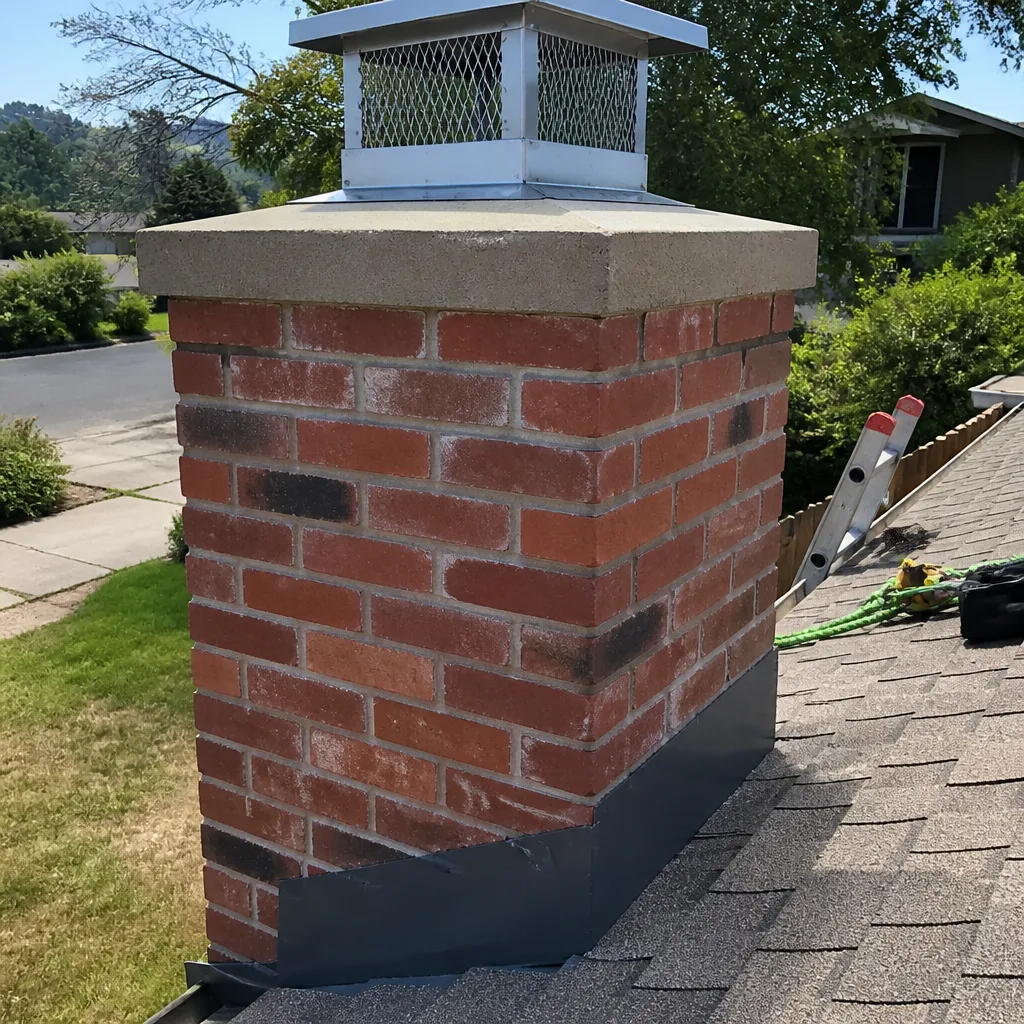
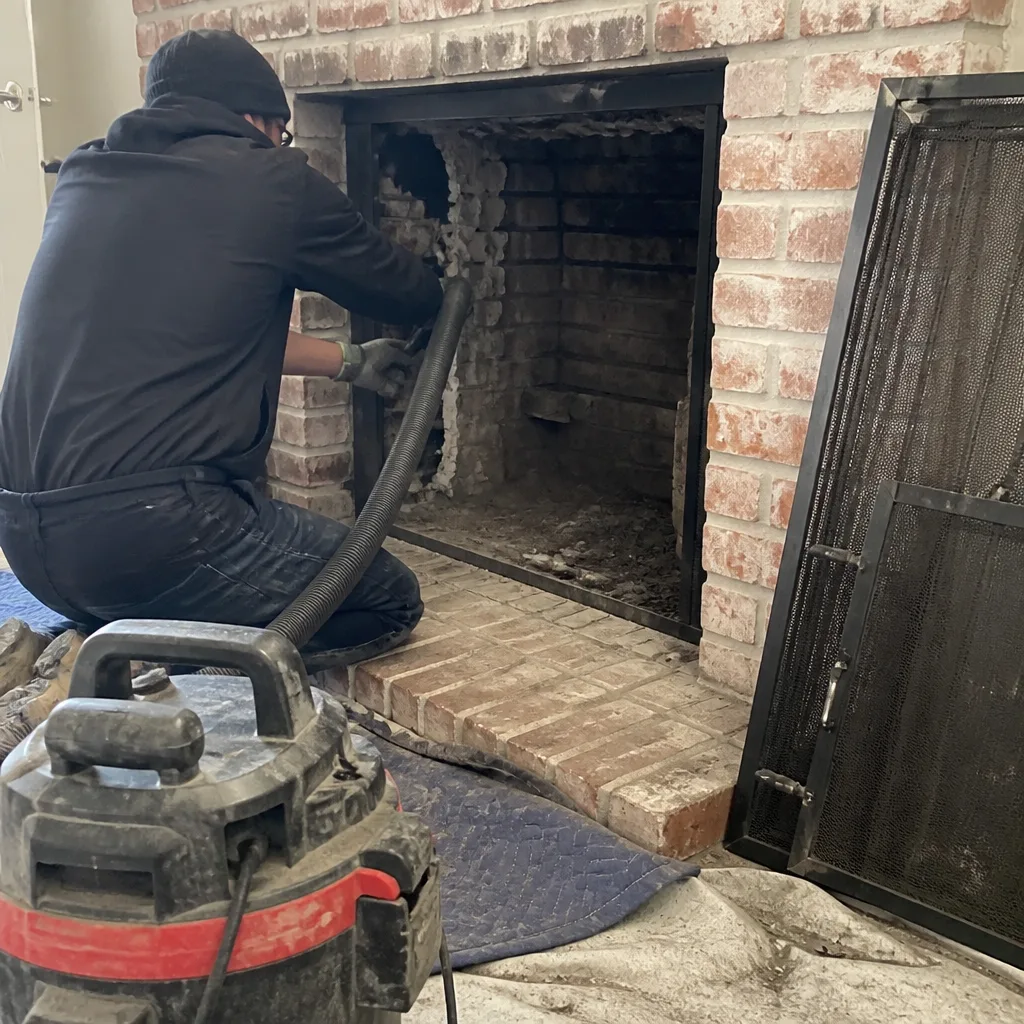
See the difference
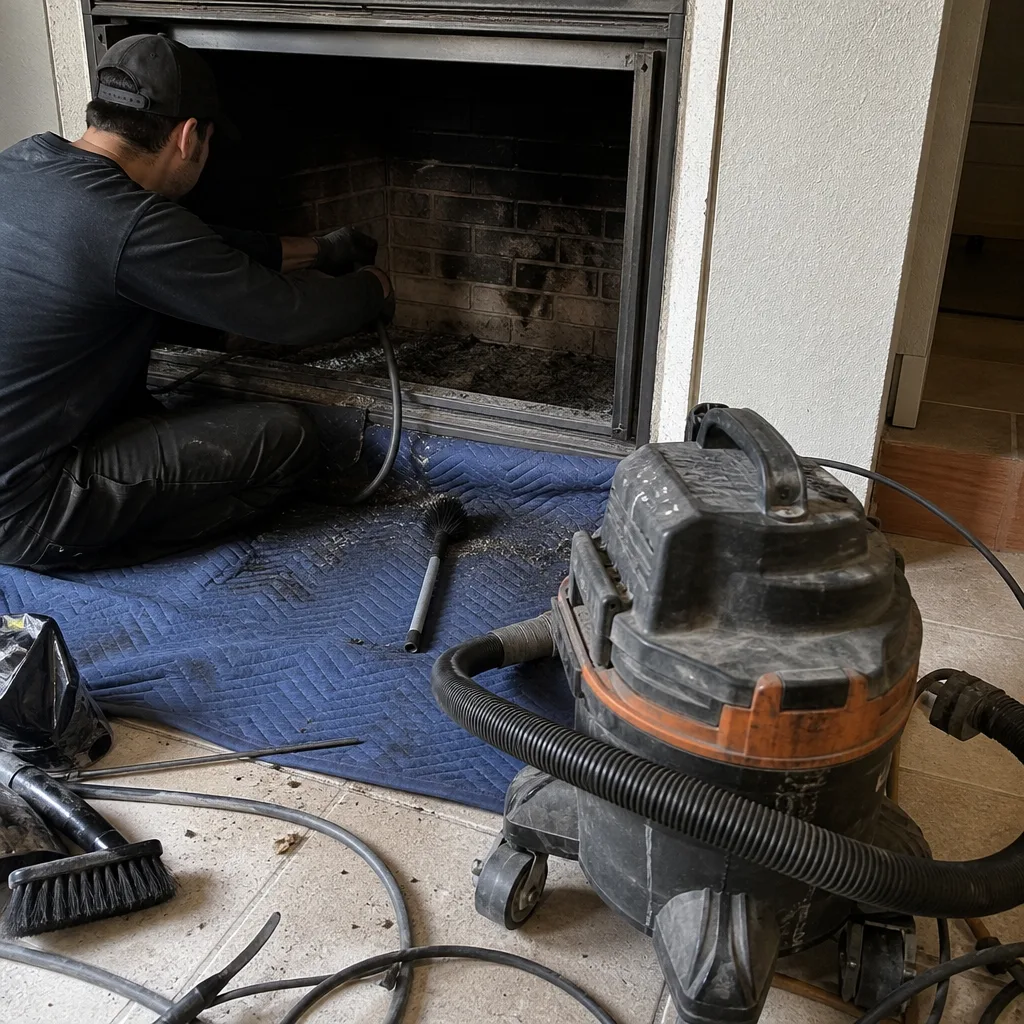 Before
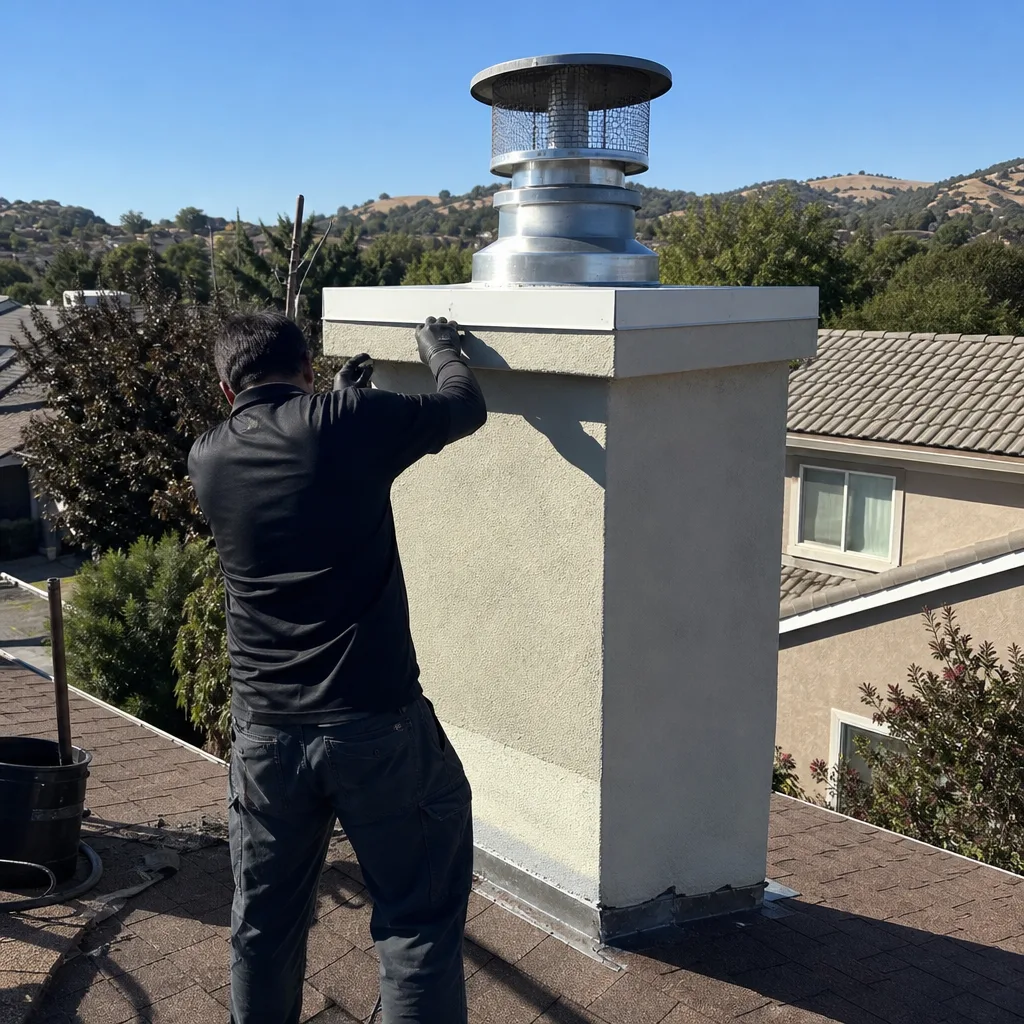 After
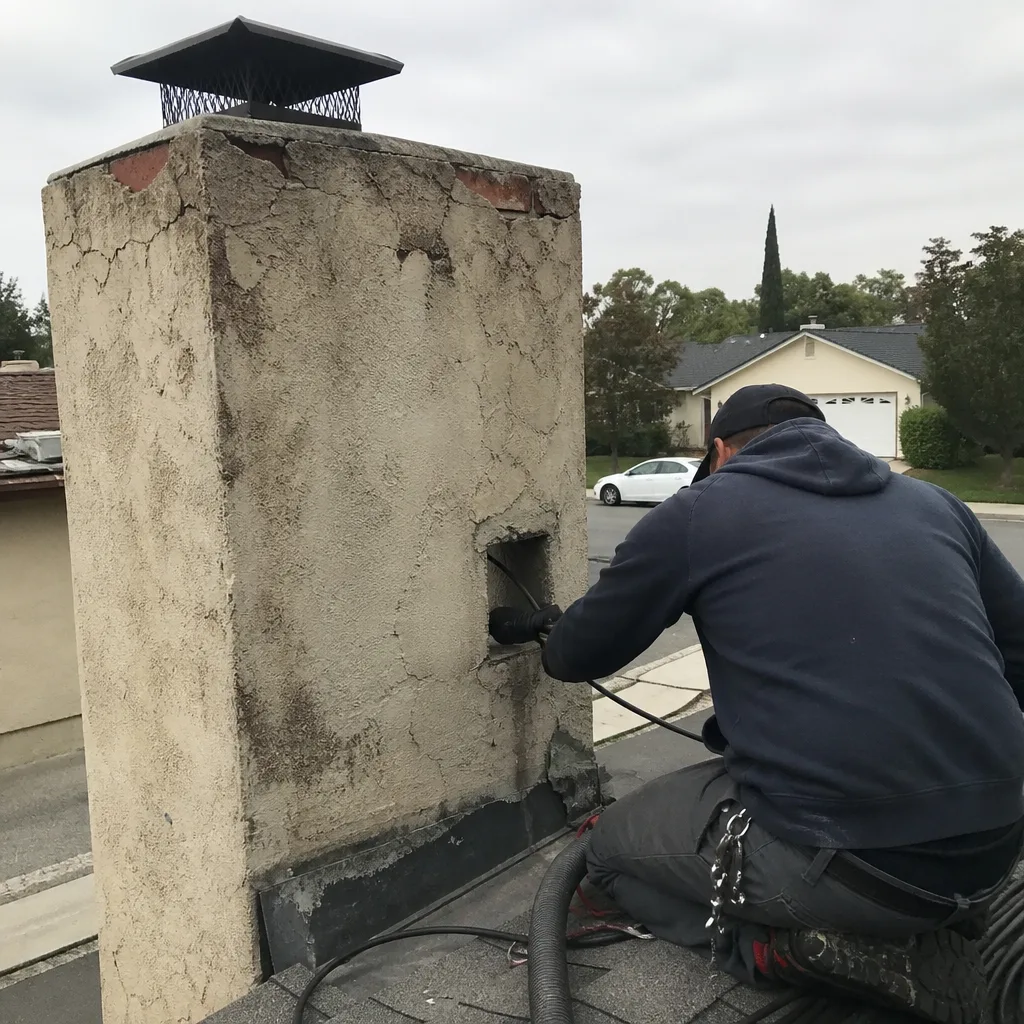 Before
 After
 Before
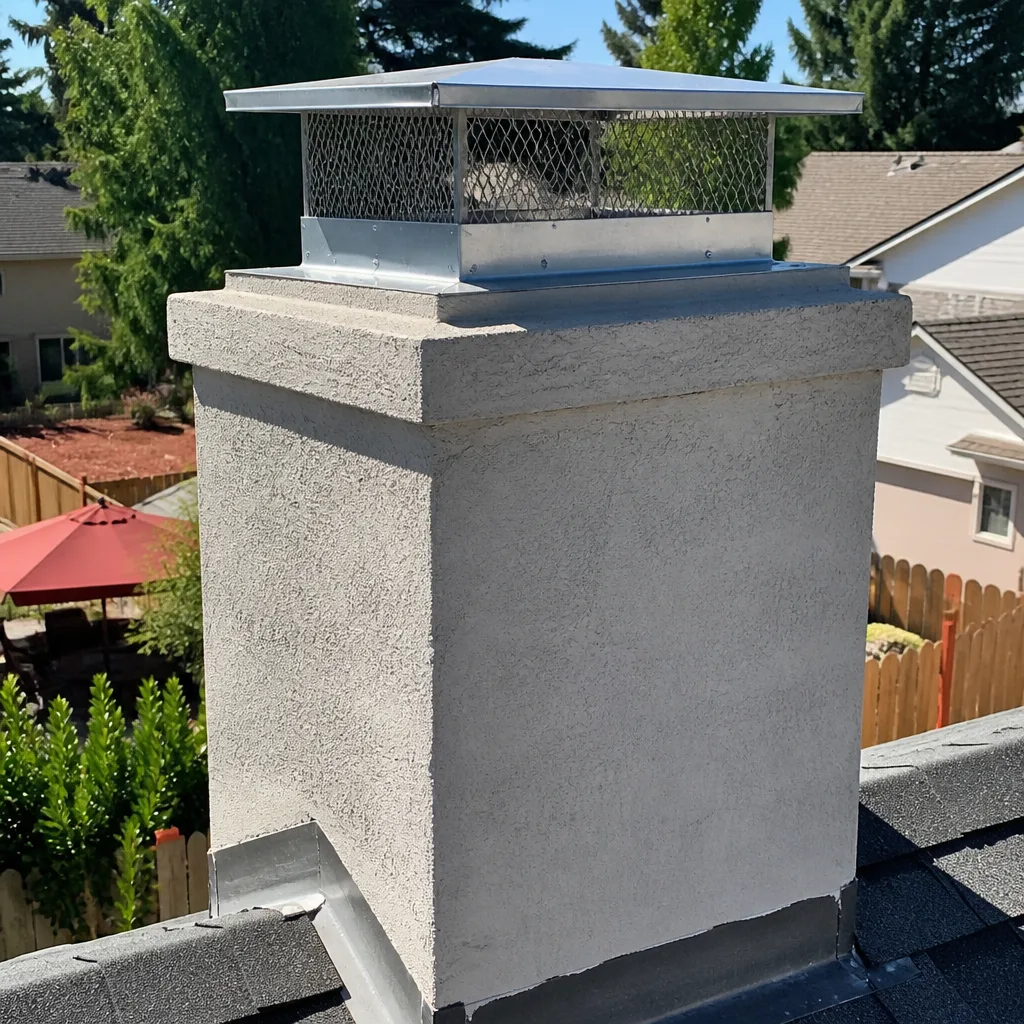 After
When to Call a Professional
Call a professional when you haven’t had the chimney inspected in 12 months or more, when you’ve bought a home without a Level 2 inspection, when you notice any of the red flags above (spalling brick, efflorescence, smoke backing into the room, or a damp fireplace smell), when your clothes take multiple cycles to dry, or when you’ve had any kind of chimney fire, no matter how small. These are all specific triggers, and acting on them early keeps costs low and risks lower. Check out more guides & resources for additional home safety tips.
Chimney Sweep Berryessa offers free estimates in Berryessa. Call (877) 610-3049 to schedule a sweep, a dryer vent cleaning, or a full inspection. We’ll tell you what we find, show you the camera footage, and fix what needs fixing, all from one company.
Frequently Asked Questions
A chimney sweep in Berryessa averages $180 to $340 for a Level 1 cleaning on a single or two-story home, with stage 3 creosote removal pushing the cost to $400 to $600. A Level 2 inspection with camera scanning adds $100 to $200. Get an exact quote by calling (877) 610-3049, estimates are free.
The NFPA recommends a chimney sweep at least once per year, regardless of how often you burn. Homes that burn unseasoned wood or use the fireplace as a primary heat source may need cleaning every six to eight weeks during burn season. The annual cadence is about inspection as much as cleaning, so stick to it even in Berryessa’s mild winters.
You need a Level 2 inspection if you’ve bought or sold a home, changed fuel types (wood to gas or vice versa), experienced a chimney fire, weathered an earthquake or severe storm, or gone more than a few years between inspections. Most Berryessa home purchases trigger this requirement, and real estate transactions often depend on it.
Creosote continues to accumulate, moving from stage 1 to stage 2 and eventually stage 3, at which point a single hot fire can ignite it into a chimney fire. Water damage from cracks in the crown or cap quietly worsens, and hidden liner damage can allow carbon monoxide to enter the home. Skipping one year is a gamble; skipping multiple years is how expensive structural repairs happen.
No. A sweep cleans; it doesn’t repair. A cracked flue liner requires either resurfacing with a product like HeatShield or relining with a DuraFlex system. A proper sweep will identify the crack on camera and recommend the right repair path, which is why it matters to work with a company that does both Chimney Sweep in Berryessa and chimney repair under one roof.
Yes. Dryer vents accumulate lint even when the dryer appears to work normally, and the restriction builds gradually until it becomes a fire risk. The NFPA lists failure to clean dryer vents as a leading cause of dryer fires. Annual cleaning is the standard recommendation, and it’s a quick, low-cost service that prevents a high-cost disaster.
The Bottom Line
A chimney sweep is not a single action. It’s a sequence: cap, crown, liner, smoke chamber, firebox, ash pit. When any part of that sequence gets skipped, the sweep is incomplete and the safety picture is false. Berryessa’s climate doesn’t reduce the need for this work; it changes the creosote pattern and adds moisture and wildfire ember risks. Annually, get the sweep. On home purchases, fuel changes, or after any chimney fire, get the Level 2 camera inspection. If the inspection finds damage, get the repair, not just a report. And don’t leave the dryer vent out of the equation. One call covers all of it.
Written by the team at Chimney Sweep Berryessa home, serving Berryessa since 2013. Clean flue, safe home.